Friday, November 18, 2011

Fairies are Gods of the Past

Fairies are Gods of the Past

Just as there are deities grown out of tales of fairies, trees, and other natural forces, so to did the deities eventually return to being such beings as people thought less and less about them. Even as lessened beings, however, the deities of old:
 
“To a considerable degree retain their hold on the faith of the peasant and, at least in outlying districts, maintain a vigorous existence. The Church has waged war against them for centuries and has degraded and disfigured many of them. Although their expression has in many cases become greatly altered, yet their original features may easily be recognized by a careful observer.” (Ralston, 1872)
 
These deity/fairies manifested themselves as both friendly and unfriendly beings while retaining their close relationship with humans or growing bitter and cruel over time. Byelobog, one of the divinities of the Russians which retained his kind nature, became Bylun, an old man which assists travelers in finding their way out of dark forests and also assists reapers within corn fields. (Ralston, 1872)

In Great Britian there was a former deity who dressed in leaves and would help children lost in the mountains. (Briggs, 1967) Danu, a goddess of the Celtic peoples, became not one but many fairy beings one of which is a hag known as Black Annis which haunts caverns and hills from which she seeks to devour humans. Hills in general it would seem have become the resting places of the gods which had passed on into their fairy forms.
 
“In a prayer of S. Columba's, (he) begs God to dispel "this host (i.e. the old gods) around the cairns that reigneth."
 
In Ireland, the divinity of the Tuatha Dé Danann is still recalled. Eochaid O'Flynn (tenth century), doubtful whether they are men or demons concludes, "Though I have treated of these deities in order, yet have I not adored them." Even in later times they were still thought of as gods in exile, a view which appears in the romantic tales and sagas existing side by side with the notices of the annalists. They were also regarded as fairy kings and queens, and yet fairies of a different order from those of ordinary tradition. (Maccullock, 1911)

Many of these deities returned to being simple natural phenomena. The Blue Hag of the highlands, for example, appears to be the personification of winter. She herds deer and fights spring with her staff which freezes the ground. When spring wins, she hides her staff under holly where the grass never grows. (Briggs 1967)
The Tiddy Mun was a fen spirit which caused pestilence and controlled the waters and the mists. Although the people still held affection for him, like all fairies and ancient deities he could be dangerous if he was insulted. Once when parts of the fens were drained, the people had to pacify him with prayers. (Briggs, 1967) That they pacified him with prayers is telling about his general role in the world. In essence, Tiddy Mun brought all the things that the fens were said to bring from the fog to the diseases. Even with all of these problems, people still ultimately love the landscape around them especially when such a landscape makes them unique from their neighbors.

The ocean deities too remained behind continuing to manifest the sea. “Bucca” or “Bucca-Boo” seemed originally to have been a sea god. Fishermen left fish on the sands for Bucca and/or a piece of bread at harvest time along with a few drops of beer.” (Briggs, 1967) As time passed, his role did shift, however, to that of a being which torments children. As we’ve seen, internal duality, that is making the same being good and bad, was common among the old religions of Europe. As time went on the deities’ abilities to do either of these grew less and less until they were left tormenting children.
The lessening of deities became so extreme that Dirra, one of the gods of old, was captured by the Earl of Desmond as a fairy bride after she’d become a simple water nymph. It was not, however, just the Christians who lessened the deities of the peoples they’d conquered or converted. The Romans on conquering Gaul turned many of the local gods into nymphs and naiads when their sacred pools, trees, valleys, etc. were taken over by Apollo. Then as Briton was once more conquered by another religion, these beings were once again lessened to fees, fairies which stand no larger than a child.

Charles Squire maintains that many of the fairy beings of Ireland are the divinities of the pre-Celtic peoples who inhabited that kingdom who were lessened when the Celts invaded. Specifically he states that:
 
“The leprechaun, who makes shoes for the fairies and knows where hidden treasures are, the Gan Ceanach, or "love-talker" who fills the ears of idle girls with pleasant fancies when to merely mortal ideas they should be busy with their work; the pooka, who leads travellers astray, or taking the shape of an ass or mule, beguiles them to mount upon his back to their discomfiture; the Dulachan, who rides without a head, and other friendly or malicious spirits. Whence come they? A possible answer suggests itself. Preceding the Aryans and surviving the Aryan conquest all over Europe was a large, non-Aryan population which must have had its own gods who would retain their worship, be revered by successive generations, and remain rooted to the soil.” (Maccullock, 1911)

It would seem strange to think that a divine being, a god, could be captured the way a leprechaun is. Forced to become some man’s bride through a simple trick the way many fairies are in legend, or that they should be as feebly petty as to try to “beguile” people to ride them as a means to cause people discomfiture. So if as Charles and MacCulloch maintain these beings as previous gods then would indicate that such beings have been greatly weakened to the point where they become fairies.

Natural Forces are Fairies

Fairy List

Forces of Nature

At one time when the fishermen of Brittany were faced with fog, they would threaten to cut it in two with a knife. The Irish would battle the waves with axes in order to kill the fairy spirits within them to prevent the tides from rising too high. (Maccullock, 1911) Fairies were found in every force of nature from the wind that blew to the heat and the cold. As shown by the previous examples, the relationship between people and the forces of nature was different from that of other fairies because people were more likely to feel the need to threaten or even do battle with the forces of nature. At the same time, however, people also sought to appease the forces of nature whenever possible.

In England, children would offer Jack Frost a spoonful of kissel as they asked him not to destroy their winter crops. (Keightley, 1870) Such respect does appear to have had an impact on the fairies in many cases. Ded Moroz, the current Russian Santa Claus figure, was at one time a cruel fairy that would freeze people to death. Respect or a change in human opinion of him transformed him into the gentle being he is now. In one Russian Cinderella story, a girl was sent into the woods to freeze to death by her wicked stepmother. As she sat in the cold, Frost leapt from fir tree to fir tree snapping his fingers as he went. Then as he came into sight, he started mocking the girl, but she always responded to his teasing respectfully even calling him “Frost Dearest!” So he ultimately felt sorry for her and wrapped her in warm blankets to keep her alive through the cold before leaving her with gifts that would make her wealthy. Later in the story, Frost freezes the girl’s disrespectful sister-in-law to death for telling him that she’s cold  (Ralston, 2004). So while people were willing to threaten the forces of nature when they thought they could get away with it, they also realized that careful respect was important in everything they did. Among one group of people it was considered dangerous to knock icicles down because doing so causes Frost to grow angry.

Baba Yaga, one of the most feared of all fairies in Russian folklore, “appears to be a personification of the spirit of the storm. When she tears her way through the forest, making the trees writhe and howl as she passes and sweeping away the traces of her progress with a broom, she is looked upon as the whirlwind. When as ‘a black cloud’ she chases fugitive heroes, she seems to be the thundercloud which threatens to blot out the light of day.” (Dasent, 1904) Yet at the same time, Baba Yaga helps a prince who acts boldly calling her Grandmother and telling her that his wife has been taken from him. So despite the fact that people often feared the fairies of the wind greatly, the wind also seems to be one of the most helpful fairies within the folklore of Europe.

In the Spanish folktale (Lang, 1897) “A Sprig of Rosemary,” the main character asks Sun for help, but Sun sends her on to Moon, who sends her on to Wind. And it is ultimately Wind, not Sun or Moon, who takes the time to help her.  In the “White Bear,” a girl searches for her husband and ends up being carried by the East Wind to help her on her journey then by the West and the South Winds. In the end, none of these can help her so she is forced to seek help from the cantankerous North Wind who at first doesn’t care about her. However, on hearing that she has lost her love, he transforms into a fatherly figure and provides her with the help necessary to regain her husband.  (Bunce,1878)

This story shows that the wind and fairies in general can feel fatherly (or motherly) towards humans, perhaps in much the same way as we can feel fatherly towards those in need or will take in stray animals. Indeed, even the grouchiest and perhaps one of the cruelest fairies can still feel kind-hearted emotions under the right set of circumstances.
Beyond such feelings of kindness, the wind also seems to have a great sense of fair play despite its destructive nature; such that if one can seek them out, they will pay off the debts their nature incurs.

In a Norse tale, the wind blows away a boy’s lunch over and over again until at last in frustration he seeks it out and complains at which point the wind provides him with a magical cloth which will never run out of food. (Dasent, 1904) Such swapping of favors was common for forces of nature as shown by another fairy tale in which the sun gives a woman a child when she pleads for it. In return, however, the sun asks that he be allowed to take the child when she reaches womanhood. (Lang, 1900) Because the forces of nature could be destructive and helpful and because there were so many of them, it was important to choose which ones to pay respect to carefully.

In a Russian tale, a man bows to Sun, Frost, and Wind but pays extra respect to the later, causing the other two to grow angry with him. However, Wind is able to blow away Sun’s heat and Frost’s cold so that neither can hurt the man proving that Wind is the most important of the three. (Ralston, 1872) Such stories of choosing which fairy or spirit to pay the most respect to are common within Russian folk tales because by choosing which fairy to pay the most respect to, one could gain special favors from them. Of course, the person making the choice had to be careful to choose the most important fairy or at least the one that could protect them from the wrath of the others.

Water Spirits as Fairies

Wells, Springs, Pools,
and Fountains

In the search for habitable planets, humans will, more than anything else, look for planets which could have running water. Water is that which provides life. No matter how far back in human history we go, this was understood. Clean water not only allows a person to drink, it gives them something to clean with so as to prevent diseases. That same water helps crops to grow, providing food and a livelihood to the people around it. Few things held greater reverence for the Celtic people than pools of water. Indeed, water spirits were perhaps the most common of all nature’s spirits. (Briggs, 1967) The nature of fairies of the many wells and springs were so important to the people in ancient times that long after they stopped worshipping the other fairies, and deities had faded in importance to little more than murderous fairies, the Catholic Church was unable to stop the worship of water and so was forced to dedicate the sacred fountains to Saints in order to make the worship of water legitimate. (Maccullock, 1911)

Christians were not the first ones to rededicate wells and water to a new religion, however. Many of the river gods and goddesses within the Celtic lands “seemed to possess pre-Celtic names.” In other words, the importance of these gods was so great that the Celts continued to worship them even after they had overcome the original worshipers, a worship which continued even after they were Christianized. (MacCulloch, 1911) It was the spirits of the wells that were the people’s guardians and comfort. In one story, a group of horned witches kept invading a woman's home tormenting her and eventually forcing her to flee. After fleeing from her home, the woman collapses in tears beside a well and it is here that a voice speaks to her telling her what she must do to be free of the witches.  (Joseph Jacobs, 1892)

Well spirits and water spirits often have no personification but are beings represented only as a simple voice which provides advice to humans in need. In “Brother and Sister,” a witch curses the streams of the forest so that anyone drinking from them will change into an animal in order to curse her two stepchildren. The spring, however, warns the two children of the danger so that they can avoid drinking from the stream of water at first. (Grimm and Grimm, 1812) The voice in this story comes from the water itself. So, as before, the water of the ancient European world appears to be alive, not just in the form of a human but in and of itself. What we see in this story is that just because this living water can be cursed and poisoned by a powerful witch, this does not mean that the water is a willing participant in the problem. Thus Water, like any fairy, appears to have a limited amount of control over what happens to it. So while it can heal others and purify itself to an extent, there are some things it cannot overcome. In the aforementioned story, one of these things was a powerful, human witch.

Even so, Water is a powerful human ally against the other beings that might do them harm. There are many stories in which a person only has to cross water to be safe from a magical being pursuing them. (Wentz, 1911) In one of the most famous American folktales, “The Legend of Sleepy Hollow” a headless huntsman can be thwarted in his attempts to take a human’s head if the human simply crosses over a bridge which crosses over water. The simple act of crossing water is significant because the water, as we have seen, is alive and is at least at times a protector of humanity. So, just as household fairies won’t allow uninvited evil into a home, the water will protect humans from spiritual dangers.

Water does not, however, always appear to care who it is helping so long as it is helping people who are alive as this helpfulness extends to those who don’t deserve it. Criminals are able to cross water for safety just as easily or perhaps more easily than innocent children can, as the latter are more likely to be subject to drowning by the fairies within the water. What’s more, the advice of water fairies is given even to those who not only don’t necessarily deserve it but who would do evil with it. In the “Story of Gold Tree and Silver Tree,” a Scottish variation of the “Snow White” stories, a trout in a stream takes the place of the mirror in advising the evil stepmother, telling her not only that Gold Tree is more beautiful but also letting the stepmother know that her stepdaughter survived the Queen’s attempted murder as well as where she is located. This information allows the evil stepmother to try to kill her innocent stepdaughter again.  (Joseph Jacobs, 1896)
In this story, the trout is the personification of the pool of water as fish are often representative of the fairies within wells and other bodies of water.
 
“Even now in Brittany the fairy dweller in a spring has the form of an eel, while in the 17th century Highland wells contained fish so sacred that no one dared to catch them.” (MacCulloch, 1911)

“Odin also gained his great wisdom from a fountain known as ‘Mimir’s’ (Memor, memory) ‘Spring, the fountain of all wit and wisdom’ in whose liquid depths even the future was clearly mirrored and besought the old man who guarded it to let him have a draught. But Mimir, who well knew the value of such a favor (for his spring was considered the source or headwater of memory), refused the boon unless Odin would consent to give one of his eyes in exchange.”
(Guerber, 1909)
 
Even though the Mimir demanded something in return for his gift, he still seems only to care about what he can get out of his wisdom. Thus, water spirits’ goals would seem to be far more enigmatic than those of beings that were once human or are somehow connected to the mortal world. Yet it is obvious that they care about humanity in some form; otherwise why would they provide aid to those in need? One possible reason that the water seeks to aid humans could be that the water seeks respect above all else.

In one Russian tale, two rivers, the Volga and Vazuza, get into a dispute over which of them is wiser and stronger in order to gain the respect of the other. Eventually, they agree to race to prove which is better. This race takes the form of a race to the sea in the springtime so at least in this case their bodies are the rivers themselves. Russian rivers are well-known in myths to demand respect of humans; drowning anyone who doesn’t provide this respect while providing easy crossing for those who do. So it is apparent that these rivers greatly desire to be respected. The desire for respect, for sacrifices to it can make water a cruel being at times.

“The malevolent aspect of the spirit of the well is seen in the "cursing wells" of which it was thought that when some article inscribed with an enemy's name was thrown into them with the accompaniment of a curse, the spirit of the well would cause his death. In some cases the curse was inscribed on a leaden tablet thrown into the waters just as, in other cases, a prayer for the offerer's benefit was engraved on it. Or, again, objects over which a charm had been said were placed in a well that the victim who drew water might be injured. An excellent instance of a cursing well is that of Fynnon Elian in Denbigh, which must once have had a guardian priestess, for in 1815 an old woman who had charge of it presided at the ceremony. She wrote the name of the victim in a book receiving a gift at the same time. A pin was dropped into the well in the name of the victim, and through it and through knowledge of his name, the spirit of the well acted upon him to his hurt. Obviously, rites like these in which magic and religion mingle are not purely Celtic, but it is of interest to note their existence in Celtic lands and among Celtic folk.” –(MacCulloch, 1911)

Rivers themselves are enigmatic creatures; they provide water for humans to clean themselves, to drink from, to aid in the growing of crops, and to travel along. Yet at the same time they are a destructive force which floods the land; destroying the same crops they allow to grow, the cities they allow to exist and which drown the children they keep alive. It is not simply a matter of capricious opportunity, however, as again rivers will travel far out of their way in floods to do these things. In another Russian fairy tale, the spirit of the stream takes the form of a King-Bear who seizes Tsar-Medved’s beard as he’s drinking and won’t let go until he manages to trick the king into giving up two babies (a girl and a boy). The King-Bear in this case is a multi-elemental spirit as it later burns a falcon’s tale, finds the children in a secret underground lair, and carries them off to the mountains.

Water often seeks victims. Peg the Prowler drowns a person once every seven years (Briggs, 1967). In Celtic mythology, fairies appear as horses which then try to lure people to riding them so that they can drown these humans or even drive them into the water. Because rivers had such seemingly random emotions, humans would provide offerings to them in order to appease them. This is where the idea of wishing wells comes from. However, providing gifts to the water is not as simple as tossing a coin into a well. Great care must be given to insure that the water fairy is respected because, as with all fairies, they become helpful or dangerous based on how they are approached.

In the story of Mother Holle (Lang, 1890) a girl’s wicked stepmother forces her stepdaughter to do all the work as per the usual tale. As she is spinning outside the cottage, she drops her spindle into the well. Fearing her stepmother more than the depths of the well, the girl dives into it. Instead of splashing into deep water, she finds herself in another world with a woman who keeps her as a maid for weeks. Because she is so respectful, Holle comes to be very impressed with the girl and gives her gold as a reward. At this point, the stepmother is jealous of the girl’s sudden wealth and sends her own daughter out. Because the daughter is idle and disrespectful, Holle punishes her. This is more than just a statement that one should be hard-working, such stories are religious tales warning one to be respectful of the fairies.

One could argue that the girl in this tale was lucky because while she was respectful of the fairy once she met it, she was not careful in her approach. Humans who interrupt fairies during private moments will often pay with their lives. For protection and blessing from the wells, humans of the past would offer gold and models of limbs and other parts of the body that had been healed or which they desired the well to heal for them.

“Leaden tablets with inscriptions were placed in springs by those who desired healing or when the waters were low, and on some the actual waters are hardly discriminated from the divinities. The latter are asked to heal or flow or swell—words which apply more to the waters than to them, while the tablets with their frank animism also show that, in some cases, there were many elemental spirits of a well only some of whom were rising to the rank of a goddess. They are called collectively Niskas—the Nixies of later tradition, but some have personal names—Lerano, Dibona, Dea—showing that they were tending to become separate, divine personalities. The Peisgi are also appealed to perhaps the later Piskies.” (Religion of the Ancient Celts)

Clothes and cloth are another common offering provided to water fairies. In one story “treasures were flung into a sacred lake near Toulouse to cause a pestilence to cease. But a boy later fished up this treasure and, as a consequence, fell soon after in battle--a punishment for cupidity.”

It would seem than that water fairies’ goals go beyond those of simple respect as driving people into the water does not provide them with such. Though perhaps one could argue that fear is a replacement emotion for respect, or that water spirits are angered by the lack of respect they are currently being shown. If this is the case, however, why don’t they torture us with massive floods or make it impossible for the disrespectful to swim in them? The answer may be found in the fact that humans at one time would offer up one of their own to certain waters. While it’s important to remember that not all water fairies would seek the death of humans, some of them often do. But not just any death would do. It had to be a death by their hands.
What exactly were fairies after in such cases, however? It’s difficult to say. Perhaps they sought lovers, servants, companions. Or perhaps they sought to drain the human’s vitality for themselves. It’s even possible that, like a vampire, the water of the fairy must feed on the life of a human every so often. Speculation on such things is difficult at best so perhaps it is best to look a little further east to gain a better understanding of water fairies. In Russian mythology we see snakes that closely resemble Indian Nagas. (Ralston, 1872) Indian Nagas still exist within writing and the belief of not only India but also Chinese folk religions and Shintoism in Japan. So while the Naga myths did not duplicate themselves perfectly as they spread across the world, these stories did have a clear influence on those of Europe.

So it is with water fairies more than perhaps any other form of fairy that we see a clear connection between them and the beings of Asia which had multiple natures, multiple souls which means that the fairies may be difficult to understand because they are more than one thing at a time.

Relationship Between Deities and Fairies

Fairy List

What are Deities?


Just as humans exist somewhere between fairies and giants, so do fairies lie between mortals and deities in their ability to perform magic. Deities appear to exist physically alongside the giants as massive, awe-inspiring beings. For example, Loki is so large that he caused earthquakes when he was struggling beneath the ground. At the same time, it’s obvious that deities are able to change their size whenever it suits their interests - often choosing to enter human houses in disguise and Odin is believed to have become the leader of the fairies' wild hunt through the forest in a human form.

The differences between the ancient gods and fairies may be less than many suspect, just as it is with humans and fairies. On one hand, many of the fairies are descendants from deities or created by them. On the other, some fairies seem to come from the same place that deities are from and are even older than the deities themselves. For instance Zeus, the leader of the deities in Greek mythology, was raised by a nymph who kept him hidden from his father. Further Odin would often turn to spirits of the earth for advice and knowledge.
Examining the evolution of European beliefs about deities makes the definitive line between the worlds of fairies and deities even harder to see. Initially, Europeans had no real pantheon or concept of deity as it is now understood. Rome’s first deities were the spirits of rocks, trees, and animals in other words before they worshiped gods Romans worshiped fairies (Bailey, 1907).
Among the Celts, most gods were local gods rather than all-powerful deities. They were the gods of the rivers, mountains, trees, war, and more, making it hard to make a clear distinction between them and other spirits which might exist.
J. A. MacCulloch (1911) believed that the divinities were the most important spirits which only later came to be deified as deities. Oftentimes, these deities included among their ranks the spirits of the great humans who had died. This shows a connection not only between fairies and deities, but humans and deities as well.
These examples suggest that the only separation between deities and the other spirits (fairies) is simply that humans hold more respect for the deities.
Looking back to the roots of European beliefs, we see that within Near and Central Asia there also appears to be little conception of deities. (tengerism.org) Even among the Greeks deities often act as fairies. At one time, for example, Hermes took the bogyman's place in coming down the chimney to scare naughty children thus cementing himself as a fairy. (Purkiss, 2007)

Perhaps then, fairies are deities who have not been conceived as such by humans. In other words, deities are hierarchically higher then fairies because of how humans regard them. Moreover, as we will see in the chapter “Fairies are Forgotten Gods”, deities can lose their godhood and turn back into fairies. This deification process can go beyond the fairy stage and down to the realm of humans such that humans can become the deities that people worship. Nothing makes this clearer than the evolution of the wild hunt which was, at one time, led by Odin who had become a fairy. However; “in the middle ages, when the belief in the old heathen deities was partly forgotten, the leader of the Wild Hunt was no longer Odin, but Charlemagne, Frederick Barbarossa, King Arthur, or some Sabbath-breaker, like the Squire of Rodenstein or Hans von Hackelberg, who, in punishment for his sins, was condemned to hunt for ever through the realms of air.” (Guerber, 1909)

What we see then is that while there are clear mythological lines between humans, fairies, and deities, it holds more in common with the line between children and adults then between one species and another.

In the Beginning

To understand European’s original fairy faiths we must begin by finding the origin of the European peoples – by tracing their linguistic and mythological beliefs beginning with an examination of ancient Europe's mythology about how the world began. This after all is the beginning of the world in which fairies were such an important part that they were considered to be the spirits of everything within the earth; the rocks, the soil, and mountains.
Germanic, Scandinavian and Indian Mythology states that in the beginning before there were fairies there was chaos. Out of this chaos sprang forth the first creature. But this creature was not a god; instead, he was the grandparent of the gods. For Indians, this being was named Purusha, while in Norse he was called Ymir. In both tales, this first being was eventually killed and in both tales their bodies were then used to make the world. Their bones became the mountains, their blood became the seas, and their flesh became the earth. From Ymir’s flesh rose the trees and dwarfs of Norse and Germanic mythology. So it is that the fairies of ancient myth, the spirits of the trees, the mountains, and the oceans, were born from the first being’s body. Furthermore, these trees eventually produced the humans in European Mythology. The Indians however believe that humans came directly from Purusha’s flesh and that each caste grew out of different parts of his body. Though seemingly different, these two religions on opposite side of the world share a linguistic history and have the same basic creation myth.

When one examines the stories of creation across the globe - from Ireland to India and as far reaching as Japan - we quickly discover that it is almost never the first being to come into existence that rules the universe. Instead, the beings that come to rule the universe came into existence much later and are often generations removed from the first being.
In fact, these later deities would often slay their divine ancestor– the first being to come into existence, in order to replace him.

This set of creation myths shows us two things; first it shows us that the deities of mythology were vulnerable; that just as they had slain the first being - their grandparent - they too could be slain and displaced by their decedents. This danger creates tension between them and humanity as well as between them and the semi-divine fairies who can, in theory, replace them just as they replaced their ancestor.

Secondly the similarities between these creation myths show us that even after thousands of years, Europeans retained much of their ancestral understanding of the world.
It’s important to keep in mind that Europeans do not come from Europe. Instead we see two primary linguistic groups of people within Europe who brought with them two cultural and religious ideas which existed before Christianity and which remained in the belief in fairies even after Christianity came. These two peoples are;
The people who share Uralic or Finno-Ugric languages which settled in Finland, Northeastern Europe as the Baltic peoples, parts of Russia, the Sami people of Northern Scandinavia and more recently in Hungry. Their fairy faith still survives among some of the Mari people of Russia who retain their pagan faith and the Komi people of Northern Russia who retain many of their original beliefs and a number of other people within the same language and cultural families in Siberia.

Next some four to five thousand years ago the Indo-Europeans entered Europe and over time came to replace most all of the native Europeans languages such that the Indo-Europeans linguistic and religious influence came to dominate the Greeks, Romans, Germans, Celts, Scandinavians, Russians in Europe and the Kalasha peoples (in Pakistan), Vedic Peoples, and Proto-Iranians in Asia. Even though their faith has vanished from Europe there is a lot we can learn about them because the Romans and Greeks were and are both Indo-European peoples and they have each left behind a number of records about their respective religions which can help us come to understand these peoples. Additional records have been made of the Germanic and Icelandic Sagas and Epics. Further the Kalash peoples of Pakistan and the Peoples of India still retain a belief in fairy like creatures. Finally Eliade (1958) believed that there was a close connection between the Indo-European and Tengriism another fairy faith of the Asiatic Steppes.

There is an advantage to these relationships for those who seek to understand fairies, because while the beliefs of any one European people have faded into obscurity, there remain remnants of those beliefs within each European land, remnants which can be puzzled and pieced together and as we travel further East away from Europe, we find that the original systems of religion - from which European ideas of fairies came - are still intact and practiced. And while these beliefs have changed as they traveled across the world - and despite the fact that the people who traveled from India little resemble the people of Europe - we can still see a connection in their beliefs supported by the fact that they share a common mother languages such that these connections allow us to fill some of the many gaps and holes which have appeared in our understanding of European Fairies.

Monday, November 7, 2011

Fairies of the Hindukush

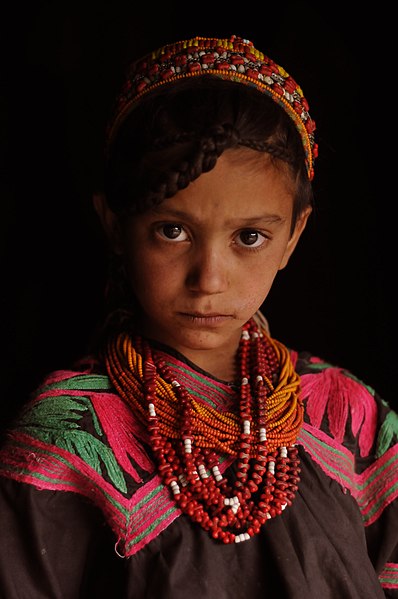
Kalasha Girl Photo Courtesy of Dave Watts
Wedged high in the Hindukush of North Afghanistan and Pakistan, in some of the most isolated valley’s in the world rests a series of small villages whose people have retained the roots of their Indo-European pagan faith and their belief in fairy like peoples even as the people around them converted to Zoroastrianism, Buddhism, and then Islam. It was only a century ago that the Nuristani peoples of Afghanistan converted to Islam and even now some Kalasha people never have. They still live in a world of fairies with sacred lakes from which the rivers spring and mountain gods which guard each of their valleys. They create effigies to those who have passed on from whom they seek guidance and help. Their culture is filled with respect for the natural world which still holds their deities and the fairies on which their crops and lives depend as well as the fear of evil beings which live in the valleys and lakes around them, beings which resemble the fairies, giants and hags of European fairy tales.
A lot of Kalash and Nuristani fairy tales resemble those of Europe and thanks to their clear this and the light hair and blue eye color some of them have the first European explorers to enter see them believed that they were descended from Alexander the Greats invasion of India.
DNA evidence shows however that they were part of the Indo-Iranian migration that brought the Vedic peoples to India and so are only related to Europeans through their Proto-Indo-European ancestors.
Because of this they have a pantheon of deities much like one would expect from an Indo-European people. However unlike the frivolous Greek deities who are constantly seducing each other and squabbling over the most petty of things the Deities of the Hindukush seem to be primarily focused on defeating evil as the Norse and Vedic deities did. This is possibly a result of their folk belief in giant troll like creatures that roam the
valleys around their homes with which their deities have to do battle.
As with many people who still have a fairy faith it is often times difficult to distinguish between their veneration of the fairiesand the deities. Indeed it has been claimed that they have some 18,000 deities a number which would certainly indicate that there is a spectrum of transition
from fairy to deity. Further they burn sacrifices to fairy some fairy like creatures in order to obtain success in battle, venerating some of their fairy figures the way one would a deity. Indeed their are a number of rituals to lure fairies and deities down out of the mountains using the smell of burnt offerings of animals, juniper, vinegar and or butter the smell of which these
beings are said to love. The peoples of the Hindukush live in a dualistic world, one that is divided not so much between the good and the evil but between the pure and the impure. Between the male and female worlds and elements. Men herd animals and hunt in the higher mountains. The high mountains are pure and so hunting within them helps to purify them from the time they spend in the less pure lower valleys and farms where the women work.
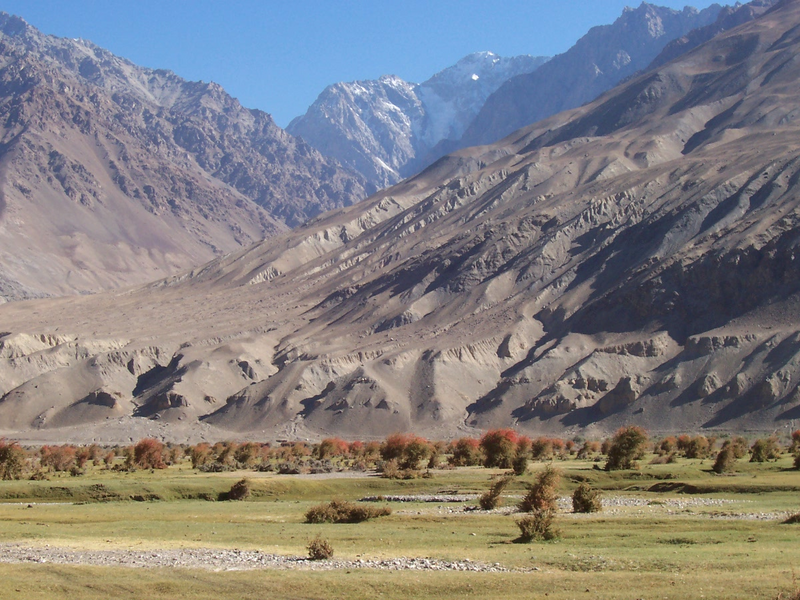
Hindu Kush Mountains Photo courtesy of Wikipedia

It is high in the mountains that the fairies live trooping down into the valleys only occasionally to follow their fairy paths much as the people of Europe believed trooping fairies did and as with Europe it was dangerous to build houses in the fairy paths for doing so would cause the
fairies to act as poltergeists destroying objects and bringing bad luck and illness until the construction was removed from their path. Because of this people believe that it was important to be very aware of the other world. Adding to this importance is the fact that they also believed that fairies were the guardians of the animals, but most especially the markhors (a type of mountain goat which are the favored game of the hunters) are said to be the fairies herd animal. This means that there’s a close connection between the fairies and the hunters because peoples success in hunting doesn’t come from their skill rather its believed that in order of a hunter to killa markhor the fairiesmust take their share by eating the animal first. The Fairies will then gather up the markhors bones and then bring it back to life at which point they’ll tell it which hunter they should allow to catch it. Because the fairies own all
the animals of the mountains and choose to send the makhors to the hunter
rather then the hunter gaining his game through skill there is no reason to
brag because of a successful hunt or to be stingy with the food. After all
since the only reason a hunter was successful was because the fairies shared
their animal with him stinginess would be disrespectful and those who acted too
boastfully about their hunt would be punished by the other members of the
village.
There are a few tales of hunters who manager to take aim at a markhor which the fairies have not given to him, however thefairies always intervene, preventing the hunter from killing the animal. In many stories they then punish any hunter unlucky enough to have tried to shoot
an animal that they didn’t want them to. Most punishments are mild, involving
scaring the hunter however on occasion they well imprison the hunter for a
number of months.
The fairies live much as humans would, eating millet mixed with walnuts as well as wild animals in villages that are stratified in the same way that human villages are between men and women. However despite the surface similarities the fairies are much more fantastic for they control all the animals of the mountains such that just as markhor are the fairies herd
animals mountain leopards and bears are said to be their dogs.
Further fairies are believed to be far more beautiful then any human, they are in essence much more pure and are able to travel through impossible crevasses in the rocks. They control the forces of nature and seem to have a sixth sense as they are almost always able to
know when a hunter is about to shoot an animal they don’t want them too.
At least some of these powers are conferrable to humans through the use of a
powder applied to a humans eyes that the fairies carry with them in much the
way that humans in Europe gained fairy sight by getting fairy water in their eyes.
Occasionally fairies would invite a human to their homes, rubbing their magical powder in the humans eyes so they could travel the impossible fairy paths and it is from these few encounters that we have our stories of the fairies world. Such interactions were very rare at best. Indeed it was extremely rare for the fairies to speak to humans at all, and only a
very few people were fortunate enough to be able to speak with the fairies
regularly, to negotiate with them when someone is kidnapped by them. Its
uncertain how someone gained the right to be able to speak with fairies when
they tended to ignore most people. Those who could were important to the
societies of the Hindukush as only they were entitled to make the sacrifice of
a hornless goat in ransom for a missing hunter which the people believed had
been taken by the fairies.

How the Fairy of the Oak Became the God of the Storm

The storms rolls in bringing with it life giving rain but also winds and floods which destroy homes and sweep away loved ones. So it is that storms are the most confusing of natural phenomenon - needed, even desired - yet at the same time, feared. Nearly everyone has experienced fear as a storm rolls in, the sense of dread as the sky turns dark andthe winds howl outside like demons. Then theirs a flash of lightening followed by a boom. But to the Indo-Europeans this boom, this lighting was an ally, brought to defeat the evil, to defeat the monsters which they feared. Of all the deities of the Indo-Europeans the most commonly attested is the lord of thunder and the storm. He is the warrior who banished the darkness and destroys evil with his thunder bolts.
This god of thunder of the storm was the chief deity Zeus in Greek legend, the Chief Deity Indra of the Rigveda in Indian mythology, as well as Perun the most likely chief deity of the Slavic peoples and one of the most important deities in Celtic, Scandinavian, Hittite and Germanic folklore.
He is the only deity I know so commonly attested to as being of primary importance in all Indo-European faiths which we still have a record of. That he is so commonly attested to can be taken one of two ways, the first is that he was the lead deity of the Proto-Indo-European peoples. Certainly he appears to be a good candidate for this and it seems very likely that he was extremely important. On the other hand we should expect that the deity best attested to would be a defender of the people against strange demons for all nearly Indo-Europeans migrated to strange lands. The people who wrote the Veda, the people who entered Europe were thousand of miles from home, for what ever reason they had traveled across the world into the unknown where only the sky and the storms remained the same. The peaceful sky however could not protect them, it could not defeat the demons they feared, only the storm could do that. Only the axe, arrows, or hammer of the gods could strike down the giants of the new land in which they found themselves. So while one can presume that the Indo-European’s thunder god is yet a sign that they were war like, (which they likely were were) one can also take it as a sign that they were afraid, that they needed a guardian in the sky. Certainly when one considers what his original role likely was this idea makes some sense. Consider after all why it is that the thunder is considered to be the weapon of good? Most people who sit in the darkness with the storm raging around them would not consider this to be so, but remember that religion has its roots in function. When a weeping fearful child climbs into bed with their parents as the storm rages around them and asks what the thunder is what are the parents to say? What story do they tell their baby to comfort them? It seems unlikely that the story of the Proto-Indo-European parents would have told their child would have been one of demons haunting the world, for there were enough of those in the darkness and the storm. What was needed was a sign of something trying to defeat the fears of the child and so they would tell their child of how the oak tree which they had made offerings to, the spirit of the oak tree which supplies some of the food was out in the storm fighting the demons, fighting the darkness which the child feared. In this way the child would know that the thunder was his friend and so would be comforted.
So while the god of the oak trees and the thunder may be a god of war, making a warrior one of the most important gods to the Indo-European peoples this may only be because a warrior is sometimes what is needed to give comfort not just to those going into battle but also to those who are weak and afraid.

Sunday, November 6, 2011

Story and Analysis of Rumpelstiltskin

Article by Ty Hulse    Read the Original Story


According to Sara Graça da Silva and Jamshid J. Tehrani's research the Rumpelstiltskin stories are likely over 2500 years old, and possibly as old as the Indo-European's life on the Steppes 6000 years ago. Most of the stories related to Rumpelstiltskin involve a fairy being trying to take the woman to be his wife. In fact the version taken down by the Brother's Grimm, the story of "Rumpelstiltskin" is the only story I know of where the fairy wants a baby. This begs the question "Why is this story different?"

It may of course be that Rumpelstiltskin is different because the woman who told it to the Brothers Grimm, being educated, changed it. It may be that they changed it. However, this article presumes that the story is different because of regional differences.

Like many fairy tales, “Rumpelstiltskin” is a story that is without a character which we can define as pure or innocent. Rather, it’s a story of two obviously wicked characters in the form of the father who lies to and thus ends up getting his daughter in a lot of trouble with the king who is a greedy man who cares about nothing but the gold he can get out of the miller’s daughter. Not all the characters are wicked, of course. The miller’s daughter clearly isn’t evil when she agrees to give a baby to a strange man, just desperate. She has been forced into an inescapable predicament by the two men in her life that she should be able to trust above anyone else, her father and her future husband. Clearly this situation puts her in a space between. She is not yet a fiancé, yet she is no longer free in that regard. She is trapped in a prison, but an honored guest. She is between being a member of her father’s house, the executioner, and the king’s household. It is at this moment when she is trapped; pulled by so many worlds that the fairy appears.

One of the premier experts on the history of European witch mythology and lore, Emma Wilby, believes that fairytales such as Rumpelstiltskin represent the idea of the familiar spirit, or shamanistic helping spirit, which comes to people in times of desperation and liminal moments. In such stories the familiar or helping spirit will either offer to aid the person or will demand that they work for them. We see this in a number of stories similar to ‘Rumpelstiltskin’.

In England’s Tom Tit Tot’, a small creature with a tale, the conversation between the girl who must spin for the king or die and the fairy goes;

"tell me what you're a-crying for."

"That won't do me no good if I do," says she.

"You don't know that," that said, and twirled that's tail round.

"well," says she, "that won't do no harm, if that don't do no good," and she upped and told about the pies, and the skeins, and everything.

"This is what I'll do," says the little black thing, "I'll come to your window every morning and take the flax and bring it spun at night."

"What's your pay?" says she.

That looked out the corner of that's eyes, and that said: "I'll give you three guesses every night to guess my name, and if you haven't guessed it before the month's up, you shall be mine.

Notice that there is no mention of a baby in this story. Nor is there any mention in most of the dozen other similar fairy tales except for the fairytale ‘Zirkzirk’. In most such fairy tales the fairy creature asks for the woman themselves. Again, this makes sense if we think of this story in terms of a helping or familiar spirit seeking to obtain a potential shamanistic figure’s service. Of course, many people didn’t want to be shamans or witches and would resist the fairy’s call.

It is telling that the woman in these stories is often unable to perform what were considered ‘normal’ tasks, that they are in some ways outsiders in their community – who are expected to act in a way that is magical. Those who worked with the spirits/fairies often acted in ways that failed to conform to the larger society, being dirty, wild, and or lazy.

It isn’t atypical, however, for the people who are called by the fairies and spirits to resist their call. After all, to work for the spirits, to be a shaman or witch, is to live on the margins of society, especially in Christian Europe. Even in Asia and Siberia, however, many would try to get out of becoming a shaman, and the spirits would torment them until they gave in, unless they could find some way to gain power over the spirits and drive them off.

In any case the initiation of a new shaman/witch and the love of a fairy could cause madness. In Georgia, for example, the forest goddess Dali’s love and attention caused a man to go mad, he would tear his clothes and scratch himself, wandering around in the forest alone (Meskhia). Pocs, 2009 states of new witch shamans that

“Such a person becomes weak or ill, either physically or mentally. If they survive, they have the power of healing, soothsaying, and the ability to contact the afterworld. This motif may be found in a number of tales of South Slavic and the Balkan peoples as well as those from Central Europe.

South Slavic folktale “Stanko and the Fairy” narrates about a shepherd named Stanko, who played beautifully on his shepherd’s flute. When the Angelus bell tolled he did not start to pray but instead played the melody on his flute, and was punished. A Fairy appeared before him, and from that moment on he could not find peace any more. The fairy was following him like a shadow, even when he ate or slept. Neither the priest nor the witch doctor could help him. Totally deranged…

People who had been lured to remote places by the fairies returned to their homes only with great difficulty and were physically or mentally afflicted.”

Given this we can think of the stories of guessing at a supernatural being’s name as a sort of moral on how to escape a forced relationship with the supernatural beings.

Why a Baby?

It is rare in the ‘Rumpelstiltskin’ like stories for the fairy to want a baby, as already stated they are more likely to want the woman themselves. Obviously, fairies often did want human children. Briggs in “The Vanishing People” states that “One of the earliest of the traditions about fairies is that they coveted and stole children (and adults)… Women were stolen to be wet nurses to fairy children or to human babies taken into fairyland, young men with special talents, musicians and singers or those beloved by fairy women…. The fairies seem to have been shy breeders… and they were always anxious to revive their powers with a human strain.”

Obviously, Briggs was talking about British and not German fairies, but Germany too has numerous stories about fairy like beings coveting human labor and lusting after humans.

Yet typically when a fairy wanted someone for nefarious purposes, they simply kidnapped them. Fairy tales are full of people being kidnapped by fairies to work for them, to be their mates, etc. Yet this particular “männlein,” as the German text designates, Rumpelstiltskin, despite outward appearances doesn’t just take the baby.

Again, most fairies in stories don’t ask for the child they want, instead they simply take it. Rumpelstiltskin, however, despite being clearly able to sneak into a prison, being able to weave magic doesn’t just take the child as he obviously could. He tries to get the girl to accept giving the baby to him. What’s more, even after he comes to collect the child, he decides to give her another chance to escape her agreement with him.

Considering that during the time this story takes place children were left in the forests in droves or orphaned on the streets, Rumpelstiltskin could have taken hundreds of children easily, and taking them would have been an act of kindness as Rumpelstiltskin would have been rescuing them from starvation. He doesn’t just want any baby then. What he wants is this particular baby. Indeed, by his own words, this baby is more precious to him than all the treasures in the world.

W know then that this particular baby is precious to Rumpelstiltskin for some reason. This leaves us with the question; Why does Rumpelstiltskin want the baby in the first place? To answer these questions, we must examine what fairies are as well as a few other fairy tales. Let us begin by placing Rumpelstiltskin into the possible categories of fairy to see where he might fit, or if he even has a place as all fairies don’t necessarily seem to.

Possibility 1 - Rumpelstiltskin is an ancestor spirit or a forgotten god.

Jack Zipes echoes Eliade’s belief that “fairy tales are mythic morals after the religious ideas became taboo to talk about.” Fairy tales, according to Zipes, include the concept that; “Since myth narrates the deeds of supernatural beings, it sets examples for human beings that enable them to codify and order their lives. By enacting and incorporating myths in their daily lives, humans are able to have a genuine religious experience.”


https://www.amazon.com/dp/1076284515/ref=cm_sw_r_tw_dp_U_x_p7y6DbMZ8D3WV 

Spinning itself was a magical act, there are stories of women using spun thread to block the passage of vampires, or to protect themselves from dangerous fairies that were seeking to harm them. Spinning was associated with the figures who controlled the fates of people, and with many of the most powerful goddesses. After all, spinning and weaving predate farming, meaning the idea of deities that worked thread and clothes predates the idea of a deity associated with the earth and the fertility of crops. Zipes states that “A common wish was a good marriage obtained through skill at spinning, through productivity and the ability to make excess well. In equal measure these tales reflect the fear of being bad at spinning, at being clumsy and the social shame that came with this. Indeed, many are the deific figures that would punish women who were slow at their spinning. As with many fairy tale figures these women had to use cleverness and help to overcome their lack of skill.”

It was common for the most important goddess figures of the Alps to encourage spinning and punish those who were lazy or bad with their work. 

In my book “I Writer’s Guide to Spirit Journeys and Fairies” I note that;

“there were in fact two separate types of spirit journeys which have both come to be called wild hunts, and often confused for each other. The first of these is the trooping journey, in which witches would join chthonic goddess figures in trooping around the countryside. These goddesses were not usually connected with fertility, but were instead connected with the spirits of the dead, and household chores such as spinning. In Scotland this figure was Nicnevin, the queen of the fairies, on the borders between England and Scotland she was Gyre Carling, in Tyrol she was Perchta, and in Northern Germany Holda. She was also known by numerous other names in numerous other regions. In essence she was the queen of the witches, leading them along with troops of the dead and unborn children on hunts through the sky on holidays. She was in the habit of punishing lazy women who did not complete their spinning fast enough, while rewarding hardworking ones. This goddess, and by extension the wild hunt she led was ambivalent.”

Wilby states of the goddesses who lead the wild hunt that; “she possessed the same ambivalence seen so clearly in the tribal dark shaman and the spirits he emulates, with a witch from Val di Fiemme claiming, for example, that when her mistress ‘‘journeys through the air she has two patches around her eyes, one on each side, so that she cannot see anything: and if she were able to see everything she would do great harm to the world.’’ 

Rumpelstiltskin fits the idea of this wild and ambivalent deity figure. For he is at once threatening and helping. Rumpelstiltskin is a teacher and guide. According to Zipes “he is more a prophet or miracle-maker, who makes a straightforward bargain, and when he returns to receive the firstborn child, he offers another deal in the form of a riddle to see if she has perhaps become smarter than she was before.” (Jack Zipes)

So, while at first glance the idea that Rumpelstiltskin might be a god seems preposterous, it’s important to keep in mind that many fairy tales are about previous pagan gods and moral values that are now taboo to speak of. Now consider that Merlin was raised by a fairy as was Malagigi the wizard who aided Charlemagne in myth. King Arthur was taken by Merlin who saw his future before he was even born, and Lancelot was taken and raised by fairies as well. This might mean then that Rumpelstiltskin is after the child because he sees the child’s future or at least its potential future. This particular baby is not just that of the woman’s after all but also that of a king, and so is the future king just as King Arthur was. Thus, Rumpelstiltskin doesn’t just want any baby he wants to raise, or have someone else raise a king, while removing the child and future king from what is quite possibly a long line of tyrants or, at the very least, from his currently greedy father. We see something similar happen in a French fairy tale in which a fairy tells the king and queen:

“If I left him (your son) to you to bring up... you would be certain to make him as foolish as yourselves. I do not even intend to let him know that he is your son.”

So at least in one incidence a fairy claims to be removing a child from their parents to help ensure that they are raised properly. While one can’t always trust fairies, of course, we must again recall that the fairies don’t have to give any explanation. They can just take the child if they want it and leave. Further, we must also consider that because Rumpelstiltskin may potentially be able to see the future, that he is actually after the child he knows he loves more than “all the treasures in the world.” As an ancestor or deity, he could be either the child’s grandfather or seeking a way to help his descendants by putting a better king on the throne.

Possibility 2 - Rumpelstiltskin is the spirit of a conquered people or one of their gods. In this possibility, Rumpelstiltskin might be after a mixture of revenge or is attempting to help his people rise up to their former glory by raising the future king of the land. In this he could be a Merlin-like figure of a conquered people who, just as Malagigi the wizard of Charlemagne’s court, was later derided as a devil by later people. Rumpelstiltskin might be a hero to a conquered people still hiding in the woods thus making him an enemy to the kingdom.


Possibility 3 - Rumpelstiltskin is a nature spirit or a simply a unique fairy. It is more challenging to understand the reason a nature spirit or unique fairy would be interested in a specific human child except that perhaps they are aware that they do love the child because of divination. Another possibility comes to us from the story of Powell in Wales in which a human king aids the fairies by slaying an enemy they couldn’t. Thus, it’s conceivable that a nature fairy could desire to take a specific child because it knows that it loves or could help that child.

Possibility 4 - Rumpelstiltskin is a devil/fallen angel or witch. Although I’ve chosen to leave this theory of fairy nature out of this book because it is a much later addition to the fairy theory and so ultimately doesn’t fit within a book explaining the motivations of fairies in more original traditions, it is still conceivable that Rumpelstiltskin is meant by the storytellers to be a devil trying to tempt the girl into the sin of giving away her child. Ultimately, however, while this idea could be workable, after thousands of years of Christianizing the people, telling this story would likely jump on the opportunity to accuse a creature of being a devil if they thought it was so.

Through this simple review we can now see that Rumpelstiltskin is after the baby for four possible reasons:

1 - Rumpelstiltskin wants the baby because he knows that he loves him.

2 - He sees the baby’s future and realizes that it can be a good king finally bringing peace to the land of his ancestors.

3 - He seeks revenge or a way to protect his fallen people.

4 - He knows he’ll need the baby’s help at some future date.

To understand which of these answers makes sense, we must again find an answer to the question: Why doesn’t Rumpelstiltskin just take the baby? Again, there are a number of possible answers which present themselves:

1- Rumpelstiltskin doesn’t simply take the baby in order to mock the miller’s daughter. It’s possible, of course, given the capricious nature of fairies that Rumpelstiltskin is simply teasing the girl, mocking her as mischievous fairies often do. However, if this is the case, why not simply take the child even if she is successful in guessing his name? Or better yet, why even give her that possibility in the first place? Perhaps as a way to mock her further, for he assumes she’ll fail.

2- Rumpelstiltskin seeks to lead the miller’s daughter into sin. The girl is the only good character in the story. If Rumpelstiltskin can get her to give her child to a devil, then he has caused her to sin. The problem with this theory, however, is that if his goal is to cause her to sin, why give her any chance to redeem herself? Why not simply take the child as per their first agreement? Further, why would he suspect the devil of telling the girl his name as he accused when she discovered it if doing so would cause him to lose her soul? In general, this answer makes no sense, so it further eliminates the possibility that he is a devil or fallen angel.

3- Rumpelstiltskin has a conflict. Rumpelstiltskin knows what he needs to do; he knows that he can make the kingdom better, gain help from the child, have a child of his own, etc., but he has a conflict about his method of doing it. So he doesn’t simply want to take the child from its mother. He wants her to accept the loss. In the end, however, he realizes that this is impossible and so he symbolically tears himself in two, ripping his dual nature in half.

4- Rumpelstiltskin is after something more than the child. In a similar story, that of Tim Tom Tat, a little, hairy creature offers to weave for a girl in return for her. In a similar vein, it’s possible that Rumpelstiltskin is hoping by giving the girl a second chance to save the baby he’ll be able to make her feel so defeated that she agrees to come with him. In this case, he is after both the future king and the queen.

5-In another similar story, the Scottish Rumpelstiltskin Whuppity Stoorie tells the girl that fairy law requires that they give the girl three days to guess her name. This is a confusing requirement as, again, fairies take babies without asking all the time. So why do they have to give a person the chance to get out of it unless there is something else at play because of the girl or the child’s relationship to the fairy world?

It seems most likely, given all the possibilities, that Rumpelstiltskin gives the girl a chance to get out of giving him the child because he is in a conflict about what he’s doing. Recalling also that fairies can be multi-natured, we must also consider the possibility that part of him is perhaps trying to force the other part of him to allow the girl to keep the child because he feels sorry for her. This makes even more sense considering what Rumpelstiltskin is. The German version of the Rumpelstiltskin’s fairy tale uses the word “männlein” to represent him.

Männleins in fairy tales have a history of helping girls marry the prince. In the story of “The Three Männlein of the Woods” a young girl is sent by her evil stepmother into the snowy forest to pick strawberries. As she searches for a way to complete her impossible task, she stumbles upon a cottage of three männlein who, in return for her kindness, make gold coins fall from her mouth whenever she speaks, cause her to grow ever more beautiful, and bless her that she’ll marry the king. In other tales, männlein offer advice to princes, or to young men, in order to help them rescue a kingdom and save the princesses.

Männleins appear as knowledgeable. They are the creators of fate. Rumpelstiltskin himself is so good at spinning he can spin straw into gold, spinning ultimately being the activity used to help control fate. Rumpelstiltskin was also showed just when the girl needed him and is also capable of doing the impossible to help her. So, he clearly is able to manipulate the future. What we must presume then is that, at least to an extent, Rumpelstiltskin is attempting to create fate. However, neither his ability to tell when someone needs his help nor his ability to do the impossible prevents him from giving the girl the chance to get out of having her baby taken from her. So obviously he’s in a conflict about what he’s doing. So, it’s likely that like the other Männlein he is kind and is essentially attempting to make the world a better place. However, in doing so he has stepped outside of his usual role of helping damsels in distress and princes on quests and is now trying to steal a prince from a damsel in distress.

Rumpelstiltskin then is most likely some form of deity or ancestor spirit seeking to help his people by raising a king who will actually be good and a child which he loves. Unfortunately, in order to do this properly he must play the role of a villain, a role at least half of his dual nature is not comfortable with. This is why he tries at first to give the miller’s daughter a chance to keep her baby.


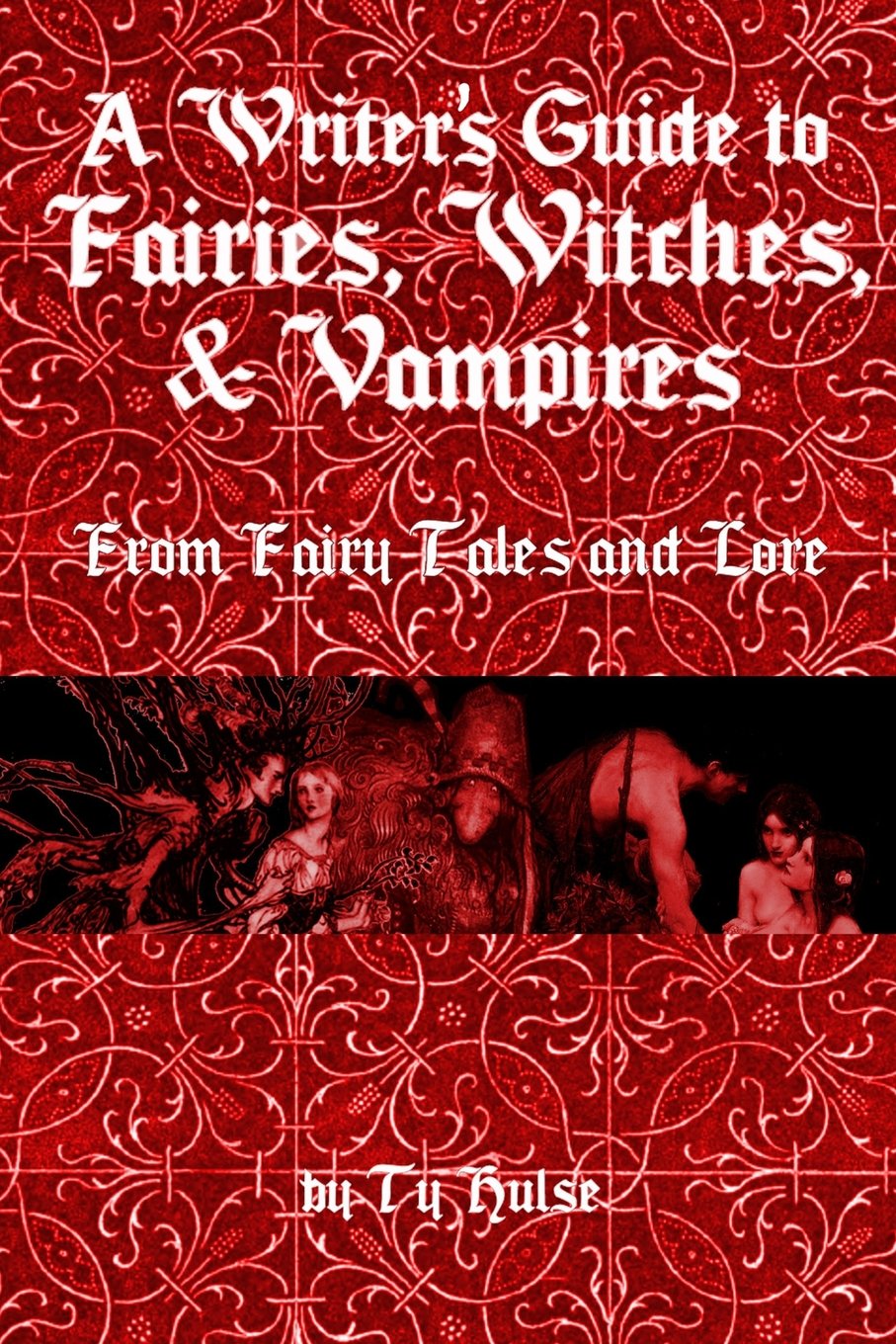
My Book on fairies in which I break down fairies by their motivations, their character traits, etc, instead of by where they lived.
Fairies are some of the most compelling characters in fairy tales, yet few people understand them. From fairy refugees to blood thirsty vampires this book takes you on a journey to discover what drove these characters, where they came from, and what they wanted.


Common Fairy Traits

By Ty Hulse

Although each fairy is unique their are a number of common traits which many of them hold in common. This is a short list of some of the most common traits which fairies have. You can see my pervious article at the bottom of this page if you wish.


Because people believed that the fairies controlled their fate and lived as their neighbors people often thought of them as complex beings. People once frequently thought about how they might ingratiate themselves to the fairies and their kin, while worrying about how they might offend them. Early Anglo Saxon doctors would not only try to cure diseases, they would try to figure out how the sick person might have offended the fairies and what they might do to make up for it. (Alaric Hall) (Elves in Anglo-Saxon England Matters of Belief, Health, Gender and Identity)

It would be nearly impossible to come up with a complete list of every trait the fairies could potentially have, that said, the ones which appear in stories, and don’t simply act as a force of nature, will tend to have one or more of a number of common traits.

I have visualized these traits in a wheel because there isn’t always a clear dividing line between these traits. Rather, there is a sort of continuity between the common trait’s fairies exhibit.


Joyous/Artistic

Music and dancing are the fairies delight, as Jacob Grimm notes in his book on the folklore of the German people. The fairies were most often seen when they were dancing atop hills or feasting within them. They were great lovers of beauty, art, and joy, and it wasn’t uncommon for people to encounter them when they were seeking to hire a musician. People often longed to dwell among the fairies with their feasts and joy. They would turn summersaults as they ran, laugh raucously, and act whimsically. What’s more, given their control of nature, they could be said to create the ultimate art – the pools of water, lakes, rivers, forests, moors, and seasons of the world.


Vanishing/Sorrowful

Yet there is also a sorrow that marks the fairies who are, as has been noted reputedly, always in the process of vanishing. Since the Medieval era people have written that the fairies are vanishing, are leaving their homeland, becoming refugees. There are many stories of the fairies asking people to take them on boats away from their homeland, of them sadly leaving the lands they once loved.

Fairies are dreamlike beings, and while dreams can be joyful, they are also effervescent and can vanish like a bubble in the wind at any moment. The Pixies of Southwest England and Cornwall are said to be shrinking, vanishing every time they use magic, until they will disappear entirely. Perhaps this constant vanishing is why the fairies sometimes seem sorrowful in their joy. In medieval literature fairies could appear to celebrate without a cause, going through the motions of joy without ever actually experiencing the happiness.


Dreamlike

For fairies are often very dreamlike. Indeed, many people encountered them in their dreams. When a witch would visit fairyland, they didn’t simply fly off to dance with the fairies and present themselves to the fairy king and queen. Rather, they would lay down and enter a catatonic like state so that their soul could leave their body. People would visit the fairies and their kin during near death experiences or at other similar times.

“The fairy world is always described as an immaterial place.” (Wentz, 1911) Further testimonies gathered from Celtic peasants go on to attest that: “Spirits and fairies exist all round us, invisible. Fairies have no solid bodily substance. Their forms are of matter like ghostly bodies, and on this account they cannot be caught. In the twilight they are often seen, and on moonlit nights in summer.” (Ibid) Many fairies shift form freely appearing as a cup, an animal, or a tree. It’s impossible because of such changes to know for certain if some fairies even naturally appear as humans, or if they simply take human form to put us at ease.

Jacob Grimm believed that: “The freest personality is proper to gods and spirits who can suddenly reveal or conceal their shape, appear and disappear. To man this faculty is wanting. He can but slowly come and go, and in his body he must abide.” (Grimm, 1935) What would it be like to not have to have any form? To be able to change and adjust at will; to be anywhere one wanted to be? There are two possibilities we must consider. The first is that fairies truly are free; that they are the artists that alter everything, even their forms, to get that which they seek. Or perhaps fairies are themselves a reflection of the world around them. A reflection that shows us what we want to see and so are controlled by the state of the world.


Illusionary

It is nearly impossible to know what is real in the fairy’s world. Nothing is what it seems in the world of fairies. Castles turn out to be dark caverns, and caverns turn out to be bright palaces. Fairies are in and of themselves mutable beings, always changing form and type. When a fairy pays a human for services rendered, the enigmatic creatures are never satisfied with simply paying them in money. Fairies instead pay humans with dead horses, dried leaves, twigs, or other seemingly useless items. Items which turn to gold should the person be smart enough to bring it home with them. What are we to take from these strange actions?


We can’t be certain if the fairy’s finery is real or an illusion, any more than we can be certain about whether their poverty is real or illusionary. The fairy world is confusing, whether as a means to test human fidelity or because of the fairies’ strange nature, fairy actions can never be straightforward. Fairies, by some peoples’ calculations, are astral beings (“astral” being the insubstantial world of the soul). This makes sense given that fairies appear at least in some respects to be essentially souls. The astral world itself is both less solid and more stable than water for it always changes, always flows, but the beings within it can choose to be solid or can choose their form.


Liminal

Perhaps the most enigmatic fairy trait. Fairies are the lords of liminal states, the transitional periods when one thing becomes another, such as twilight, when day becomes night or the cusp of adulthood, when a child becomes an adult. Piotr Spryra points out that every society has liminal periods, times where things are changing from one to another. Peace to war or war to peace, harvest time, spring and planting. But “Danger lies in transitional states, simply because transition is neither one state nor the next, it is undefinable. The person who must pass from one to another is himself in danger and emanates danger to others. The danger is controlled by ritual which precisely separates from his old status, segregates him for a time and then publicly declares his entry to his new status.” (Piotr Spyra)

There is a reason, after all, that fairies are most active in Celtic lands during the times the Celts believed the seasons changed (modern day Halloween and May Day).


Fairies then, might be thought of as the earthly divinities which helped maintain and control transitional states. This meant that they could be cruel or kind, for any transition could turn out to be good or bad.


Human Reflection

The fairies dreamlike and liminal nature, mixed with the fact that they were folk religious figures meant that they had a tendency to reflect human society. Or perhaps it’s better to say that humans reflected fairy society? It was fairies like the nymphs who taught humans how to be moral, how to live, farm, and more. In Italian lore there was a fairy tale in which a fairy which kidnapped a woman was the one who taught her cheesemaking, and she in turn taught everyone else.

It shouldn’t be surprising then that when a human enters fairyland they often live much as humans, with laborers, nobility, kings and queens. Indeed, it is often difficult to tell that the protagonist of a fairytale has even entered fairyland and many memorates begin with people not realizing the people they just encountered are in fact fairies.


Folk Religious Figures

The English woman clutches her feverish child close as she runs up the side of a hill. Just a few hundred feet from her village is a rock with a hole in it. This rock is home to a hob she hopes will cure her child’s illness.

Fairies were a major part of many people’s folk religions, that is, the beliefs people held that were outside of those held by the elite leaders and scholars of a society. Women in Joan of Arc’s village would go drink water from a fairy pool when they were sick in hopes of getting better. People would ask the fairies for help with their harvest and other concerns. There are many charms, specifically designed to draw on the power of fairies and their kin. Of course, depending on the era, fairies and their kin could be central to people’s folk religion. Among the Uralic people the local divinities and spirits were the ones people prayed to first and most often, for they had been regulated to look over the world by the high gods. In Ancient Greece people frequently prayed to the nymphs first, stamped their local nymphs on their city’s money, and sang of their love for the nymphs. There is even a statement from the time that if it weren’t for the nymphs there would be no worship of Demeter or the other gods, for it was the nymphs who showed people the way to live, which is why they are frequently given offerings first.


On the other hand, in Dartmoor, among other places, fairies like pixies weren’t so much worshipped as treated like invisible neighbors. People would trade magical help for material objects from them not out of a sense of reverence but because the pixies were their neighbors.


Wise

In fairy tales one of the most common roles for fairies was that of ‘wise advisor’. They and their kin were the ones who taught witches their magic in most European countries and were asked to help divine people’s futures. This makes sense, given their semi-divine role.


Moral

The fairies didn’t avoid lying because they couldn’t lie, but because lying was morally reprehensible to them. You can read an article about fairies and not lying here…

Fairies were obsessed with morality, to the point that when one woman in Russia when outside without her kerchief covering her head, the domovoi dragged her back inside by her hair, slamming her head into the floor. Nymphs had people stung by bees for using bad words, fairies beat men who hit their wives, and villages were buried under avalanches for being cruel to a beggar in the Alps.

This last point is perhaps the most important, because the three things’ fairies hated the most was greed, laziness, and poor hosting etiquette. There are stories of them slicing up and cooking old misers, then bringing them back to life so they could do it again and again for eternity. Indeed, it’s probable that many of the beings considered fairies were rulers of the pre-Christian hells. Regardless, it makes sense that ancient, conservative, and religious beings would be so obsessed with morality.


Conservative

Fairies didn’t like change, or dirtiness. Cut down certain trees and they were libel to curse you with death, give them new foods and you might chase them off, and so something they had never seen before, and they would have to comment on it no matter what. For fairies were stuck in the past and often wore old fashioned clothing, and their ruling court was more reflective of human governments from hundreds of years before.


Ancient

Fairies are ancient of course. Some might live forever, or at least thousands of years. This not only makes them more conservative and grounded in the past, it can also make them seem to act like the grandparents of humanity, or at the very least the older couple that hangs people’s pictures on their fridge and sends money to the graduation of children who they don’t really know. For the fairies are connected to everyone in a region, they watch them and often feel for them. Thus, many fairies will become the godparents of the people in a region (which might explain why Cinderella’s godmother was a fairy).

Childish

As ancient beings who love joy and artistry, the fairies can often act childish, in both good and bad ways. They might spring into a summersault or play with children and like children. On the other hand, when offended, they can throw a tantrum like a child with magical powers would.

Extreme Emotions

Everything about fairies is centered on the fact that they appear to feel emotions much more intensely than humans do. When a human gives them the tiniest amount of help, they reward that human with lifelong happiness, gold, or some other incredibly precious gift. However, should a human do even the slightest amount of harm to a fairy, death is often the punishment. We see this repeatedly in fairy tales. In the story of “The Three Mannlien in the Wood,” (Grimm and Grimm, 1812) a young girl shares her stale crust of bread with three Mannlien and, in return, they make her more beautiful every day. They caused gold to fall from her mouth every time she spoke and were setting it up so that she’ll marry a prince. The girl’s stepsister refuses to share her food, so they cause her to grow more ugly, frogs to jump out of her mouth, and ultimately cause her to die horribly.

In “The Edda,” a Norn (a wise woman/fairy which weaves the fate of humans) trips and hurts herself as she is getting up to give a child its fate, and in her rage she curses the child to die. This is similar to “Sleeping Beauty” in which a fairy who was overlooked by a child’s parents curses the child with death. When Rumpelstiltskin found that he’d lost the child sought, he got so angry that he tore himself in two. The guardian of the bath house in the Russian folk tales will risk its life to protect people and then later will flay the skins from their bodies if it feels it’s been disrespected. Fairies have wild mood swings between happiness, sorrow, love, and rage.

Duality – A consequence of the fact that fairies can transform themselves and the fact that extreme emotions are a common fairy trait is that there is evidence that many fairies actually change form to fit their mood. A domovoi, normally a kindly being, can become murderous when angered, haunting homes and regions and strangling people in their sleep. The bwca, a kindly house fairy from Wales actually seems to change form into a bogle, a monster when it gets upset and it can take years for it to calm back down again. Even Yeats claimed that the shoe making leprechaun could turn into a flesh-eating monster under the right circumstances. This makes sense, given that fairies are forces of nature, and nature itself was a fickle thing. The same river that might help you one moment could drown you the next.

Dependent on Humans

In one Irish story a fairy queen is dying for need of human milk, in many, many more fairy children are sickly until they get some human food. Fairies it seems depended on human food, there was something in the ‘magic’ of human hands preparing or gathering something that gave them something they couldn’t get any other way. Further, many fairies couldn’t repair or make mundane objects without human help.

Add to this the fact that they often needed humans to help them in battle. Yeat’s stated that in a war between fairy clans the side with the human would win, and fairies were forever getting humans to play games with them. Even the god Odin and the Greek Olympians needed humans to help them fight some battles, for the Giants couldn’t be defeated in Greek lore unless a mortal struck them.

Afraid of Humans

Yet fairies must often fear humans – just as humans feared them. Wilde tells of a time when one of the Irish Queens was kidnapped by a the fairies, who fought a war with them, digging up their home and eventually forcing the fairies to concede. Many fairies, from leprechauns to powerful fey women such as the Italian Anguana are captured and kidnapped by a mere peasant. For humans often possess ‘magic’ that can overcome that of the fairies. Iron, salt, certain herbs, and charms can all weaken the fairies greatly. The folklorist Briggs asserts that: There seems no doubt that the children of the Goddess Don were the Dana O'sidh and there, conquered by the invading Milesians, took to the hollow hills and became the Daoine Sidh or the “Deeny Shee.” The Fianna Fin and their contemporaries fought, love and mated with these Daoine Sidh. Originally of human or more than human size, they dwindled through successive generations from the small size of humans to the size of three-year-old children.

Shy-This fear of humans could easily explain one of the reasons that fairies are often so shy. It is obvious that fairies do not like to be seen by humans; for although they live in every rock and tree, they almost never appear to humans. Instead, it is within their nature to hide from mortals. Humans presented a danger to the fairies, but there is also more going on here. Fairies often exhibit a childish sort of embarrassment, fueled by their extreme emotions.

Yet the fairies’ fear of humans stems from more than simply our ability to harm them. Fairies which fly at a distance should know they are safe from humans yet they too are rarely seen.There is a tale in which the dwarfs who helped humans all ran off never to be seen again because one person saw that they had the feet of geese. In ancient mythology, people believed that humans came from fairies; that we essentially chose to be grounded, to mature, to grow, and to change. Fairies, however, never grew and so are like shy children, like spirits that can never pass on. Fairies are forever caught in a realm between being humans and gods, between eternity and momentary bliss, between life and death. Perhaps it is the solidness, the stability of humans that disturbs fairies. Perhaps fairies feel the discomfort of our solid gaze just as a child would. The times then when fairies seek out humans are those times when humans join them in the realm of in-between; at puberty, parts of childhood, birth, and death.


Previous Article 

Mutable, Anamorphose, Astral, Creators of Illusions
Nothing is what it seems in the world of fairies. Castles turn out to be dark caverns, and caverns turn out to be bright palaces. Fairies are in and of themselves mutable beings, always changing form and type. When a fairy pays a human for services rendered, the enigmatic creatures are never satisfied with simply paying them in money. Fairies instead pay humans with dead horses, dried leaves, twigs, or other seemingly useless items. Items which turn to gold should the person be smart enough to bring it home with them. What are we to take from these strange actions?

The fairy world is confusing, whether as a means to test human fidelity or because of the fairies’ strange nature, fairy actions can never be straightforward. Fairies, by some peoples’ calculations, are astral beings (“astral” being the insubstantial world of the soul). This makes sense given that fairies appear at least in some respects to be essentially souls. The astral world itself is both less solid and more stable then water for it always changes, always flows, but the beings within it can choose to be solid or can choose their form.

“The fairy world is always described as an immaterial place.” (Wentz, 1911) Further testimonies gathered from Celtic peasents go on to attest that: “Spirits and fairies exist all round us, invisible. Fairies have no solid bodily substance. Their forms are of matter like ghostly bodies, and on this account they cannot be caught. In the twilight they are often seen, and on moonlit nights in summer.” (Ibid) Many fairies are always changing form appearing as a cup, an animal, or a tree. It’s impossible because of such changes to know for certain if fairies even naturally appear as humans, or if they simply take human form to put us at ease.

Jacob Grimm believed that: “The freest personality is proper to gods and spirits who can suddenly reveal or conceal their shape, appear and disappear. To man this faculty is wanting. He can but slowly come and go, and in his body he must abide.” (Grimm, 1935) What would it be like to not have to have any form? To be able to change and adjust at will; to be anywhere one wanted to be? There are two possibilities we must consider. The first is that fairies truely are free; that they are the artists that alter everything, even their forms, to get that which they seek. Or perhaps fairies are themselves a reflection of the world around them. A reflection that shows us what we want to see. In “Religion of the Ancient Celts” (MacCulloch, 1911) attests that: “With the growth of religion, the vaguer spirits tended to become gods and goddesses, and worshipful animals to become anthropomorphic divinities with the animals as their symbols, attendants, or victims. And as the cult of vegetation spirits centered in the ritual of planting and sowing, so the cult of the divinities of growth centered in great, seasonal and agricultural festivals which were the key to the growth of the Celtic religion to be found. Yet the migrating Celts, conquering new lands, evolved divinities of war. Here the old, female influence was still at work since many of these were female. “Most of the Celtic divinities were local in character; each tribe possessing its own group, each god having functions similar to those of other groups. Some, however, had or gained a more universal character absorbing divinities with similar functions. Still, this local character must be borne in mind. The numerous divinities of Gaul, with differing names—but judging by their assimilation to the same Roman divinity, with similar functions are best understood as gods of local groups. Thus the primitive nature spirits gave place to greater or lesser gods, each with his separate department and functions. Though growing civilization tended to separate them from the soil, they never quite lost touch with it. In return for man's worship and sacrifices, they gave life and increased victory, strength, and skill. However, these sacrifices had been and still often were rites in which the representative of a god was slain.” What we see then is that these fairies may not have been so free. They may have been, at least in part, defined by the thoughts of the people who surrounded them. So in this sense when humans wished for fairies to be beautiful, powerful beings that would make their crops grow, it was so. Later, as humans wanted them to be devils or faded souls, it again became so. Finally, when humans stopped caring about fairies, they ultimately vanished altogether.


Extreme Emotions
Fairies feel emotions much more intensely than humans do. When a human gives them the tiniest amount of help, they reward that human with lifelong happiness, gold, or some other incredibly precious gift. However, should a human do even the slightest amount of harm to a fairy, death is often the punishment. We see this repeatedly in fairy tales. In the story of “The Three Mannlien in the Wood,” (Grimm and Grimm, 1812) a young girl shares her stale crust of bread with three Mannlien and, in return, they make her more beautiful every day. They caused gold to fall from her mouth every time she spoke and were setting it up so that she’ll marry a prince. The girl’s stepsister refuses to share her food so they cause her to grow more ugly, frogs to jump out of her mouth, and ultimately cause her to die horribly. Fairies are the strict enforcers of morality for fairies will ask humans to share with them crusts of bread, the warmth of a fire, etc. Yet these same fairies can create gold, give unlimited amounts of food, and grant wishes. The only real explanations for this is that fairies are testing the morality of humans.

In “The Edda,” a Norn (a wise woman/fairy which weaves the fate of humans) trips and hurts herself as she is getting up to give a child its fate, and in her rage she curses the child to die. This is similar to “Sleeping Beauty” in which a fairy who was overlooked by a child’s parents curses the child with death. When Rumpelstiltskin found that he’d lost the child sought, he got so angry that he tore himself in two. The guardian of the bath house in the Russian folk tales will risk its life to protect people and then later will flay the skins from their bodies if it feels it’s been disrespected. Fairies have wild mood swings between happiness, sorrow, love, and rage.

Lovers of the Arts and Beauty
It’s the fairies that make the flowers blossom, the sun shine, the mountains rise and fall. In essence, it is fairies that make the world beautiful, but this is beauty as they define it. While people believed that it was fairies who allowed life to exist, people didn’t believe that fairies were creators simply for the sake of creation. Fairies are artists, and they love what they consider beautiful which is shown by their obsession with song, poetry, and dance.

“Dancing and song are their delight, and by their songs they draw mortals into the water with them... The fossegrim entices men by his music and instructs them in the fiddle and other stringed instruments.” (Jacob Grimm)

This is not to say that they are whimsical artists. Indeed, looking at the nature of artists throughout history, we see that they are rarely whimsical. Fairies are strict with their art as shown by the example of the fossegrim (a male waterfall fairy). In order to learn to play music from the fossegrim, a person would sacrifice a he-goat to him by throwing it into the waterfall. If the fairy accepted the gift, the fossegrim would grab the person’s hands and guide them so violently and for so long that blood would spurt out of the human’s fingertips. With their hands bursting apart and spurting blood, the humans in the tales would beg the fossegrim to stop to allow them to take a break, but the fossegrim would ignore their student’s cries of pain as they continued to force the human to play this way for as long as it took for them to perfect in his art and play so that the trees will dance. (Jacob Grimm) It should be clear from the amount of brutality in the way the fossegrim teaches music that fairies are demanding artists, that they do not accept weakness or pain when it comes to their art. They are beauty and art lovers to an extreme degree.

However, beauty in and of itself is a complex issue. It is more than simply in the eye of the beholder. The same artist who admired sculptures of neoclassicism can become Picaso who himself created more then just frilly art. He created works of both love and sorrow. Picaso painted scenes of war and pain, of sadness and depression alongside his works of happiness and joy. The same writers who carefully craft jokes and allow the boy to get the girl in their stories, will also kill major characters in horrible ways in another tale just as Shakespeare did.

It should be telling, for example, that the god of poetry in Germanic and Norse mythology (Wotan) is also the god who determines who will be victorious and who will lose a battle....

Fairies, like human artists, are quirky and odd. Artists are prone to violent bouts of rage. When Michelangelo didn’t like his work on the Sistine Chapel, he tore down a painting he’d been creating for years. Mozart was often reported to be half mad and would grow angry at his band for not hearing music that wasn’t actually playing. Van Gogh cut off his own ear in a fit of rage. Genius and an extreme, intense interest in one subject create bizarre quirks among humans so we should anticipate that the people who gave human traits to fairies would believe that this situation would be the same among fairies.

Thus, while human art has and is defined by endings; songs with finales, paintings with exhibition, and plays with curtains closings, many fairies do not like such destinations, and as immortal beings they never have to actually seek an ending. Their art can be a journey which never ends but continues on forever.


Immortality and Immunity
Diplomatic immunity which allows people to park anywhere they wish, drive how they wish, etc., encourages people to act differently from how one might normally behave. Diplomatic immunity itself, however, is not true immunity as the diplomat’s job is to make the citizens of the country they are in like them or their employer. Fairies have no such needs, however, so they are often times truly immune from the punishments that haunt the mortal world, even from death itself. Such immunity alters their perception of things.

Nixes, nymphs, and satyrs need not fear reprisals for their actions, and so their desires are rarely ever tempered by anything. In such cases then, a fairy becomes pure desire, mating and dancing, living for the moment because there is no need to worry about anything else. Not even the freest of humans can do this for long because eventually mortality will crash down on them, or eventually other humans will tire of their actions and they’ll be restrained. Immortality itself will greatly alter a fairy’s perceptions of the world. Mountains rise and fall, trees grow and die, even the stars shift their courses over time. Even for humans, growing older means that little things seem to matter less and less.

Imagine what it would be like to live for thousands of years and you will come to a closer understanding of the emotions of fairies. After thousands of years of life, very little would seem to matter. Any kingdom might simply be just another kingdom, any mortal is just another life in an infinite string of meaningless and temporary lives. Immortality can also cause fairies to hate the new just as elderly people are stereotyped. In German mythology, wood wives demanded that humans not bake cumin in their bread. Water wives didn’t like the touch of new clay pots in Welsh mythology. Dwarfs called humans fickle creatures (Grimm 1835).


Fairies Never Mature but are Always Ancient
Many fairies never truly mature. At the same time, however, they grow up within a few years or are born ancient from the very beginning (Grimm, 1835). Further, because of their immortal nature, they would eventually only have the slightest inkling that they were ever young at all. This situation can lead them to desire that which they cannot have, a childhood. Consider that when fairies kidnap adults, the fairies most often replace them with objects which are made of dirt or wood but are enchanted to appear to be corpses. Yet when a fairy takes a human baby, they replace the child with old fairies in disguise. So when a fairy takes an adult, it is clear that what they are after is the adult because they leave the humans very little recourse to discover the deception or to force the fairies to return the person who was taken. When fairies take human children, however, they are after something else, something more. By leaving an elderly fairy, the fairies risk being found out because of the actions of the elderly fairy. Further, they risk having the fairy abused by the humans as often happened. If all the fairies wanted was the child, then they would simply replace them with clay or wood magically disguised to appear as a dead child as they do adults.

By replacing children with older fairies, the fairies are actively seeking to take the place of the child. In history and our own society, we can see many child actors who grew up to seek after their childhood later. They sought to create a “Neverland” for themselves. Even beyond this, however, there are many people who seek to go back to or to find a childhood again. Movies are ripe with stories of people who wish to regain their youth, or to find the happiness they never had as a child. For such people, however, the rules of society, age, mortality, as well as the fact that no matter what they do they cannot look like children prevents them from achieving childhood later in life. Fairies, however, can change their form at will, and they don’t have the same social rules as humans.

Perkiss points out that when the nymphs would kidnap heroes, it seemed that they did so in order to essentually play house with the hero the way a girl might seek to pull a father, brother, or neighbor boy into a game of tea. Thus, while even human children must follow certain rules, (they can’t force the neighbor boy to play tea without adult intervention or a lot of badgering), fairies with their supernatural powers do not have very many rules at all. Further, because of their immortal nature, they have forever to gain a greater longing for a childhood and can act childlike forever. There is never a moment when they start to whither and get injured more easily or must worry about finding a job. So they can dance on the hillsides every night for eternity and so they often do.


Dangerous, Quirky, Playful, and Unpredictable
Beautiful and seductive, she moves through the trees, lithely jumping branch to branch like a squirrel. Intrigued, the boy approaches her eliciting a welcoming smile. She whispers gently in his ear before tickling him. At first he laughs, enjoying the attention, but she doesn’t stop. She keeps tickling and tickling; harder and harder he laughs. He wants to stop laughing, but he can’t. It’s hard to breathe, his lungs hurt. He starts to cough from laughing for so long and so hard, and eventually she tickles him to death. What are we to take from the strange behavior of the rusalka, a fairy of the water and forest which performs the bizarre act of seducing men so that it may tickle them to death? No matter how seemingly dangerous the fairy, they always seem to have some element of playfulness though their play can often turn deadly. Fairies are always a contradiction. Fairies are the moment when the coin is in the air, the time it hovers twirling, caught between two choices, between two opposites. The rusalka, for example, is a young girl, one who can never grow, never mature, never find true love. She is caught forever between lust and childishness, between youthful play and death. She is ancient yet has never grown up. It is a maddening moment in time that fairies live, between dark and light.


Shy
It is obvious that fairies do not like to be seen by humans; for although they live in every rock and tree, they almost never appear to humans. Instead, it is within their nature to hide from mortals. Why should this be? Why is it that fairies always appear to be nervous around humans? It is, of course, possible that the reason is the danger humans present to fairies. After all, there are a number of stories in which people take fairies hostage to force them to marry them, provide gold, or to grant other forms of wishes.

Yet the fairies’ fear of humans stems from more than simply our ability to harm them. Fairies which fly at a distance should know they are safe from humans yet they too are rarely seen.

What exactly is it about human sight that scares them? Is it perhaps the natural power which humans have, the ability to essentially give the evil eye? Or is it perhaps a form of embarrassment? There is a tale in which the dwarfs who helped humans all ran off never to be seen again because one person saw that they had the feet of geese. In ancient mythology, people believed that humans came from fairies; that we essentially chose to be grounded, to mature, to grow, and to change. Fairies, however, never grew and so are like shy children, like spirits that can never pass on. Fairies are forever caught in a realm between being humans and gods, between eternity and momentary bliss, between life and death. Perhaps it is the solidness, the stability of humans that disturbs fairies. Perhaps fairies feel the discomfort of our solid gaze just as a child would. The times then when fairies seek out humans are those times when humans join them in the realm of in-between; at puberty, parts of childhood, birth, and death.


Multiple Souls
Many fairies and similar beings had multiple souls, that is they were their own opposites. Many of the peoples of ancient Eurasia believed that people had multiple spirits, multiple souls each of which went to a different place when a person died. For spiritual beings, however, this multiple souls often manifested as multiple personalities, multiple characters. In Japan the same Kami will have different names and shrines and methods of worship for each of these souls. In Celtic lands house fairies could turn from good to bad with a change in mood (as was depicted very well in "The Spiderwick Chronicles."

Nature tends to act in a contradictory way, rivers water fields and flood them, fire warms the house and burns it down. Given that people believed nothing happened by chance they believed that the same fairy was doing both these things, and so many had multiple personalities.


Kind and Caring
Fairies are often extremely kind and caring. Santa Claus and the many fairy like beings which he comes from for example, are fairies. One of these Santa figures in the Kalasha lands would bring blessings to villages, among the Japanese the Lucky Kami would do the same. The Tylwyth Teg of Wales would leave coins in the shoes of poor servants and fairies in France would help the poor become wealthy.

As with Santa's love of children much of this kindness often manifests in a grandfatherly or grandmotherly like affection, which is why it's often important to call a fairy Grandfather or Grandmother when one first encounters them in order insure that one gets on their good side. Given that many fairies are thousands of years old they can view a human of any age as being young.

Other times the fairy might view a person the way we might see a stray animal, perhaps leaving a little food out or doing performing other similarly kind, but momentary acts.

Finally given that some fairies are the spirits humans who have passed on they can be caring ancestor spirits.


Enforcers of Morality 
Fairies have a very specific vision of how the world should work, like a grouchy old man who yells at naughty children or a kindly person who tries to direct people down a better path fairies are the enforcers of morality in fairy tales. Even the famous Santa Claus gives toys to good children, more often, however, fairies punish those who break societies morals.


Vindictive
Fairies can be extremely vindictive, killing those who offend them. In Russia those who work on and don't keep the Rusulka's day sacred risks being murdered. Those who whistle in the forest risk being tortured to death by the King of the Forest who's peace they are disturbing. When one family built on the fairies land the fairies kill them off one by one.


Murderous
Some fairies are vicious and murderous for a number of reasons. Jenny Greenteeth would drown people to replace the human sacrifices which were no longer being offered to her. Black Annis would devour children out of revenge for the fact that humans had turned their backs on her. There are elves who were in essence serial killers, killing simply for fun and pleasure. Others killed for food, and as a way of gaining power the way vampires did. In fact the smell of blood could make some vampires hungry.