Tuesday, December 6, 2022

Playful and Whimsical Art and Stories: Fantasy for Artists - p5

 Previous                  Index                 Next


Playful and Whimsical Art and Stories

By Ty Hulse
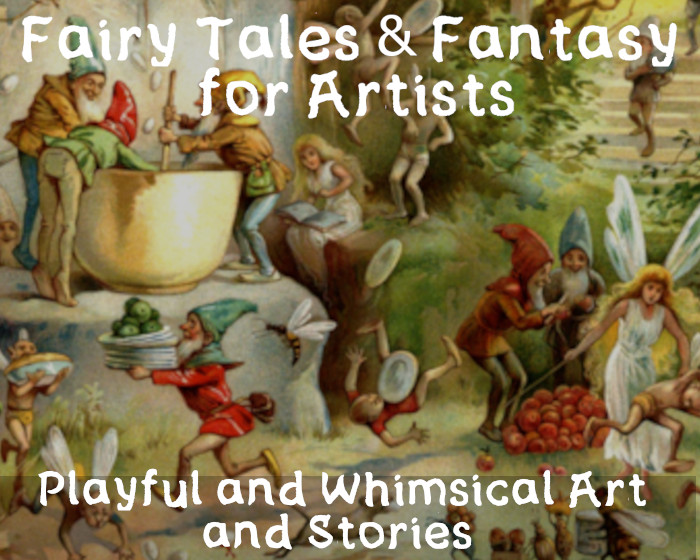

Playfulness and whimsical stories matter, because while people during wealthier times tend to think of fun as ‘trivial’, it has been whimsy and imagination verging on the edge of nonsensical that has gotten people through the worst of times. Clark points out that “As animation grew in popularity, Americans struggled under the weight of the Great Depression that followed the 1929 stock market crash. This economic crisis did not stop the Disney brothers from producing animated films… The Great Depression thus brought great hardship that inspired the need for laughter.” (Jordan Virginia Clark). 

It is important to note how important cartoons like “The Looney Tunes”, Mickey, and “Silly Symphonies” became during the darkest days of the modern era (The Great Depression and WWII). Three years after the start of the Great Depression Disney released the fairytale animation “Three Little Pigs”, the film was such a hit that the Daily News called it “the most talked about picture ever made.” “One could rarely escape hearing the tune (from “Three Little Pigs”) over the radio or whistled down the street. The song was a cultural phenomenon that served as a New Deal anthem, while social commentators and critics increasingly saw the film as a fable for the Depression that somehow ameliorated anxiety” (Wagner).


Animation, through the vivacious personification of ideals and the unification of its poignant lyrics with narrative, came to portray not only the upheaval of traditional American values but the ways in which these values were overturned and replaced. The fairytale world of Mickey Mouse and his friends masks a sensitive realism and portrayal of Depression America

Animation was able to portray the day to day angst of those wanting relief from their present situation, mostly through an obsession with becoming rich, hence alleviating the stresses of every day hardship. (Mollet)

Mood Management Theory holds that people will attempt to balance their emotions, often through the use of media such as cartoons, so it’s no coincidence that ‘The Golden Age of Animation’ happened during the Depression, at a time when cartoons were almost entirely tied to whimsy and wacky hijinks. People suffering from stress will often watch something ‘calming’ because psychologically they need to relax and reset their minds, the way someone who has just undergone an intense work out will relax, stretch, and sip water. This explains not only the value of simple cartoons, but also why movies like “Princess Bride” get watched over and over again, for it can be both moderately exciting while also relaxing. 
Fairy tales were similar, as they are often rooted in people’s need for humor during trying times. Peasants of the past told stories of many silly tricksters who would bluff giants in ridiculous ways or con their way into wealth. Even magical spells meant to cure the sick and punish those who cast the evil eye could include fart jokes as demonstrated by the Eastern European charm;

"A mouse walks along a shelf, carries a squash on his rear, the mouse gives a fart, the squash bursts apart. Let those eyes burst apart, whether they're blue, whether they're dark, whatever kind they are, they put the Evil Eye on, whether from a man, whether from a woman, let them be blasted to pieces.” (Condrad)

Even serious magic and the gods could become fodder for humor, as could the fairies which often acted exuberant to the point of childishness. For example, in the Shetlands  a trow woman came to watch a human dance, she watched  “‘till she could contain herself no longer, and suddenly skipped into the middle of the room, but her appearance was so frightsome that no man sought the honour of being her partner. Then she whirled about and screeched, so that everybody heard – 

Hey quo Kutty, an “hoe” quo’ Kutty,

Noo whau’ll come reel wi me, quo Kutty?

Sad sicht be seen up der crupeans I –

I’ll henk it awa mesel, quo’ Kutty.

Kutty henked (danced like a bird, springing about) to the amusement of many, until finally, exhausted she vanished, leaving behind the memory of her.”

This story of a fairy who grows so exuberant they can’t contain themselves, illustrates an important fairy trait. Fairies have such a zest for life they often seem to be childish. A zwerg in Germany, for example, got so excited by a human celebration that he accidently fell into the river while dancing wildly, and had to be rescued by some farmers. Another fairy in Scotland threw summersaults while running, likely for no particular reason but the joy it gave them.


Such childish displays of fairies in stories likely come in part from the fact that fairy stories were often meant to be humorous. Shakespeare’s “A Midsummer Night’s Dream” is perhaps the most famous example of fairies being used in comedy. The function of the fairies in this story is to make us laugh, whether they are the King or Queen of the fairies or the famed trickster Puck. Within the story, the fairy king Oberon “agrees to withhold future remedy for the sake of present laughter and so the show may go on. The lovers again become "the players" at this fairy king's court, the unconscious performers for others' amusement. Shakespeare has provided royal license to enjoy, to laugh at the farce of these lovers' confusions and misunderstandings.” (Comtois)


The story has a moral and philosophical function in this comedy, of course. As Comtois continues to explain: “Fickleness is presented not as a characteristic of personality but as a characteristic of adolescence. In this play they neither cause their own ills nor effect their own cure, but instead they dance to a tune they believe that they have heard the piper Love play. The implication is that however comic the action may be, it is also an inevitable stage in adolescent development, a necessary ritual action youth must perform.” 


However, while comedy is useful for elevating one’s mood, those who are feeling too strongly negative will tend to avoid comedy (Zillmann, 1988, 2000, 1980). This may be because the hostility and discomfort that people find funny when they aren’t emotionally upset can make people feel uncomfortable when they are already in a bad mood. This likely explains why animations like Mickey and Silly Symphonies were more popular than Looney Tunes during the actual Depression. Consider, for example, the animation “The Old Mill”. This is a beautifully painted animation about animals seeking shelter from a storm in a dilapidated mill. There is no real plot or protagonist. In many ways the animated short is similar to relaxing while staring at a fish tank, a campfire, or a painting. 


Yet after The Depression and War ended, moving into the 1950s and beyond, the Looney Tunes grew in popularity and many of “The Silly Symphonies” were forgotten, or at least enjoyed less. This may come from the fact that boredom was one of the biggest problems when people got stable jobs in factories, offices, and similar locations. Once the concerns of The Depression had passed, most people didn’t need to watch cute and nostalgic feeling animations to calm themselves, they needed something to reinvigorate them after a long and boring day. 


The humor people enjoy often changes according to a variety of factors. Historically adolescents tended to prefer “television shows featuring disparaging and slapstick humor, while television shows featuring coping humor are not” nearly so popular. This changes as people grow older, such that aggressive humor becomes less popular and humor as a coping mechanism increases. According to this research there are three primary types of humor; “The first two are aggressive (antisocial) in nature, namely disparaging (making fun of someone, ridiculing someone) and slapstick (physically aggressive, “pie in the face”) humor. The third is a prosocial humor type called coping humor, which functions as a coping mechanism to deal with life’s difficulties by joking about frustrations, hardships, and so on.” (Wal, Pouwels, Piotrowski & Valkenburg, 2022)


Regardless of what they prefer, people who are exhausted from work and social interactions will tend to spend more time watching TV, as Borius et al.’s (1999) research confirmed. This exhaustion doesn’t just come from repetitive, boring, or hard tasks but from simple self-control. Indeed, the more self-control a person has to exert the less likely they will be to avoid some form of entertainment after work (Hofmann et al. 2012). It is this level of emotional depletion from exerting self-control that indicates what type of films people will choose. People who are emotionally ‘depleted’ were far less likely to choose films that were suspenseful or meant to be meaningful and chose instead films that were fun. 


Eden et al. (2018) stated in their research of story selection that;


media can restore depleted self-control and act as a recovery process for fatigued individuals. Therefore, we argue that our findings do not condemn the choices of the creature seeking comfort in media. Instead, we endorse a more nuanced understanding of how, why, and under what circumstances the individual—whether feeling fully human or depleted to feeling like a base creature—makes their choices is required.


Obviously not everyone in a society is feeling the same thing. At any given time, there can be people who are stressed from and wanting to escape work, as well as people who are worried about losing their job or who desperately want one. What’s important to understand is that there is real psychological and even social value to whimsy and what is normally considered light hearted entertainment. 


Take romantic comedies, for example. It is often believed that idealistic romances will lead viewers to have unrealistic expectations of love and life. However, Hefner (2019) found that only “predominantly idealistic” romances could have a positive influence on the viewers life satisfaction. 


Strange as it may seem then, unrealistic idealism, can and often does have a more positive effect on viewers than depictions of realism, not only emotionally but even morally.  As another example, while ‘Disney Princess’ animations have long been criticized by philosophers for their impact on women and girls, psychological studies have found that engagement with Princesses “was associated with lower adherence to norms of hegemonic masculinity and higher body esteem.” The head of this research project, Dr. Coyne said "Princess culture gives women key storylines where they're the protagonist. They're following their dreams, helping those around them, and becoming individuals who aren't prescribed a role because of their gender…” further “Boys who are exposed to princess culture earlier in life tend to do a better job expressing emotion in their relationships.” (Stahle)


This shows us that a joyful and fun story is very likely to have a positive overall effect on the viewers regardless of any ‘message’ critics might imagine it has. 


We see something similar in comedy sitcoms like “Big Bang Theory.” This show followed a group of awkward and often painfully clumsy scientists. Many people disliked it because “the show suggests that anyone who works in a scientific field or is a fan of superheroes and science-fiction must be a pathological, socially awkward mess.” (Morrison) Such criticism, as with most ideas without evidence, was incorrect, however, as the show tended to make most people like scientists more. Indeed, the show was repeatedly credited with increasing the number of people studying physics. It is difficult to fully quantify this but the number of people taking physics courses in England increased 10% when the show aired. (Townsend) So after watching scientists make socially awkward fools of themselves on a sitcom, large numbers of people decided to study science. This shows that what’s important isn’t necessarily what the show depicts but the emotions associated with the characters. The scientists in the show make people laugh, which plants positive emotions about scientists in people’s minds. 


There is a long history of these ‘simple’ stories becoming popular during times of high stress, for the people in most need of them. In their article “It’s Ok to be joyful? My Little Pony and Brony masculinity” Mikko Hautakangas points out that the humor and stories found in the titled children’s cartoon offers a joy that isn’t easily available in other stories. This is why so many adult men were drawn to the story. 


Even more telling is that people who suffered through World War I and other horrors would frequently turn to whimsical fantasy. After having nearly died in the trenches during World War One. Tolkien began thinking of his book “The Hobbit” while recovering with his aunt at Bag End. Creating a series of fantasy stories then was part of Tolkien’s recovery process from the horrific experiences he had while fighting in the first mass mechanized war. Another writer who loved fairy stories Dickens, as a child had to work ten hours a day pasting labels on pots. He wrote of this experience “how could I have been so easily cast away at such an age.” He, like Tolkien would grow up to create whimsical and enchanted stories that showed the value of human life. 


Heroic Fantasy and Strength/ Fantasy for Artists - p7

 Previous                  Index                 Next

Heroic Fantasy and Strength

Neoclassical art was meant to symbolize courage, patriotism, honor, human rights, freedom and the struggle for a better world. In short, the goal of Neoclassicism was not simply to represent heroes but to encourage others to become heroes. More than this, however, their simple and often stark imagery was meant to counter the decadence and frivolity displayed by the nobility of the earlier age that had brought ruin upon the European nations. 

Thus the hard, angular painting  “Oath of the Horatii” which depicts three brothers, asked by their father to fight for Rome in a dual against the family of Alba Longa representing the city Curiatii. One of the Horatii brothers is married to the sister of the men they are being asked to kill and their sister is engaged to one of these brothers. Yet, the Horatii brothers are depicted with angular strength, showing their willingness to sacrifice their lives and their own happiness for the good of the Republic. This is key to this painting, for it was created on the eve of the French Revolution. It became an allegory for the willingness to give one’s strength and even to sacrifice oneself for democracy and a better, freer world. 


Neoclassical artists used mythology and history to try to depict social morality. According to Silvestra Bietoletti ““Neoclassical art was the aesthetic expression of the eighteenth-century philosophical movement founded on the principle of freedom of thought” which had the goal of insuring that every individual’s intellect was used to create a better world. 

Having rejected frivolity and selfishness the Neoclassical artists sought to depict grandeur, heroism, and great people in hopes of shining a light for humanity, of creating a more moralistic society that is dedicated to the ideals of freedom and a hope for a better tomorrow. In large part by reminding us of our past. 

Victoria Charles says “Neoclassicism reflected the intellectual, social and political changes of that period. The advent of revolutionary movements in France and America, based on classical ideals such as the democracy of ancient Athens and Rome, made Neoclassical art even more appealing. As three quarters of the French were illiterate, it created an opportunity for art to become a political tool to arouse revolutionary fervor.”


Neoclassism represents the desire for heroism to restore and build a better world in art, a longing which is reflected in the modern day painting on  the cover of the book of the “Midgard Campaign Setting” a table-top RPG world by Kobold Press. Consider the opening lines of the book introducing this world. 

“The age of heroes is dead, and the bridge to glory is broken— Bifrost fell long ago. The world is lost in an age of war, of dark wilderness and lost empires sunk beneath the waves. Only magic and the warmth of hope keeps lights aglow when dread things prowl and the priestly wardings shake, bent by hideous demonic rage. In this dark time, new heroes must arise to claim the crowns of Midgard, and restore the jewels to her scattered thrones. New heroes must lead a return to glory!” Midgard Campaign Setting by Wolfgang Baur 

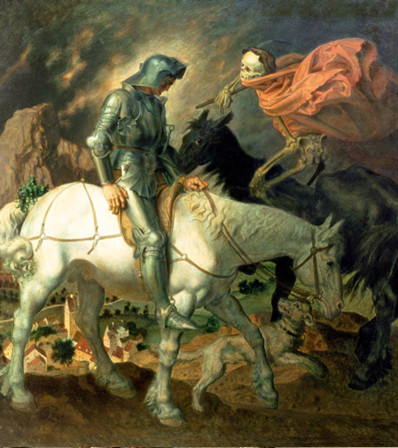
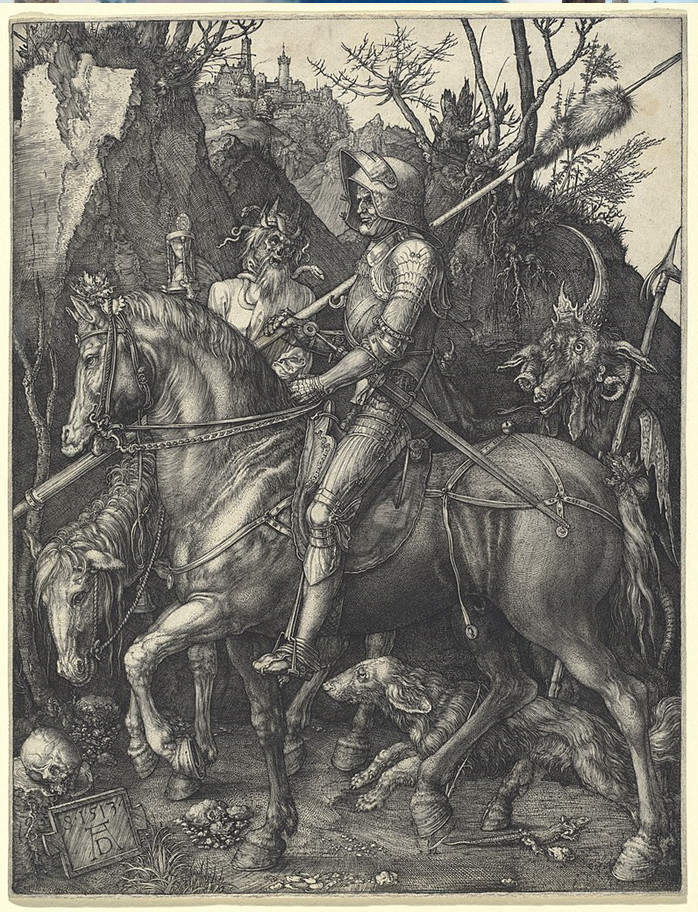
The cover art of the “Midgard Campaign Setting” by Aaron Miller shows a knight riding out of bright sun-soaked lands and into a dark forest. What light the sun provided behind him now just adds a glimmering sense of eeriness to the woods that grow darker before him. Death rides beside this knight mocking him with an hourglass, with the limits of his own mortality, and the short time he has left to accomplish what needs to be done. Yet, even with the death, the black dog, and a devil all around him the man’s face is stalwart, almost emotionless. He is represented with angular lines and posture, making him seem all the more unyielding in the face of the awesome and dreadful responsibility he faces.

What is indicated through the knight’s stoicism and the way the shadows fall on deaths face making it seem as though he is grinning wildly, is that Midgard is a world where death celebrates and the heroes move forward, dutybound to make the world a better place.

As with all great art this reflects our own world and our own time to an extent. We still desire strong and competent heroes and the book this art represents gives us an opportunity to roleplay those. More than that, however, this stoic warrior is perhaps the hero we need. They are not the angry firebrand, rather they are the stalwart rock who quietly accomplishes the things that need to be done no matter the obstacles. 

This stoicism isn’t an accident, for the other paintings in the book are mostly of individual characters or sweeping actions. It is as if the art director through this choice is inviting us into dark lands where death mocks us. We stoically ride forth, yet once within we are swept up in the many moments of our character’s lives. As our character’s work to become the new heroes that “must lead a return to glory!” 


Horror: Fairy Tales and Fantasy for Artists - p10

 Previous                  Index                 Next 

Horror: The Sublime Through a Dark and Uncertain World

 by Ty Hulse


Horror might seem to be the polar opposite of cuteness, but they are both an exploration of helplessness, with the difference being that cuteness makes us feel protective and horror makes us feel vulnerable. This may explain why to two are so often conflated with each other, specifically why cute things such as children asking us to play with them forever and ever and cherubic dolls we swear moved when we weren’t looking are terrifying to so many people. Horrific things can also be made cute, for although it’s impossible to say for certain it seems likely that one of the original purposes of fairies was to explain horrific events such as disease and those who got lost in the woods, never to be found again. Like vampires have been turned into objects of romance, these fairies of horror were turned into objects of cute beings. 


It is the switching of emotions, the use of awe and wonder, for example, which often leads to the most interesting fantasy horror. According to Hemenover and Bowman, “the sublime corresponds to the notion of terror. Lovecraft’s work in dark fantasy and supernatural horror illustrates this point. His protagonists inevitably suspect the presence of a cosmic threat to humankind, temporarily hidden from view. As they gradually uncover that threat, madness and death pursue them until the bitter end.” Mendlesohn described Lovecraftian horror as intrusion fantasy, which accomplishes its goal by transforming wonder into fear. (Hemenover and Bowman)


Fairies and fairytales too play in this boundary between wonder and terror. In the medieval chronical the “Chronica Maiora” for example, a young man is riding happily through some fields when a little red man appears among the wheat, who grows in stature the longer the youth looks at him. This red man takes the horses bridle and takes the young man, unwillingly to a beautiful lady surrounded by beautiful girls. The lady orders the young man be dragged from his horse, his skin and flesh flayed. After he has been stripped of his skin, the woman cuts open his head, pulls out his brain and eats it, leaving his head empty, yet him somehow still alive. She then lifts him back onto his horse and sends him on his way, deprived of all his wits. Through much of the rest of his life, the little red man, while invisible to all but him, stays by his side, yet despite his madness and pain the youth resists the promptings of this man, until at last the fairy lady comes to him and returns his brain. 


The fairies in Medieval stories are very much alien and, in some ways, can be thought of as being almost Cthulhu like, in that they are never meant to be fully understood. However, they are beautiful and seductive, playing on people’s desires and perceptions to make their cruel world all the more eerie. This is part of the power of fairy. “Ultimately, the unease of this fairy realm is produced through the leaving certain things unexplained – with a very real sense that they are in fact inexplicable.” (Wade, 2011)


The fairy realm in these stories frequently “exhibits a certain interplay between torture and attraction. As both beautiful and sadistically violent.” (Wade, 2011). This is a place of paradox. Sometimes when the fairies torture someone or act they have “no overarching intention” no goal in mind, they simply seek to torture for its own sake. Elves in Scottish lore would frequently scoop a victim into the sky, and force them to help the elves spread disease and death among their neighbors. The person would then be deposited back on the ground, to be haunted by the nightmares of what they had done and witnessed. 


Part of what makes fairyland compelling in these stories is that both beauty and the threat of danger is ever present. In the medieval story of King Orfeo the protagonist finds himself in “a fairy country as bright as the sun on a summers day,” with castles covered in precious stones, so that at first it is mistaken as heaven by Orfeo. Then within the fairy king’s castle Orfeo discovered the darker side of fairy – tortured humans. Here people who suffered an injury or event that should have killed them were abducted away to live a half-life, forever on the edge of death, forever in pain as the fairies use magic to keep them alive but unhealed so that they can be tortured forever. Fairies exist in their own sovereignty, such that the rules and moralities of the human world don’t apply to them. 


The terror and pain caused by fairies does typically serve a narrative purpose. As alien and terrifying as fairies are, people are often made better for their encounters with them. Fairytales and Chivalric Romances are about a person’s journey to prove themselves, to gain something, and to learn something. It is ultimately the fairies that provide the character the means to achieve these goals. Indeed, the religion of many people shaman figures would have to suffer and even be devoured in order to obtain their powers. For example, in Inuit and Yupik lore a shaman might be eaten by a bear who would regurgitate them in a painful process that would essentially make them into a new person, a shaman, who existed between the realm of the spirits and the dead, and the realm of the living. Other shamans would go on a journey;


Then the candidate came to a desert and saw a distant mountain. After three days’ travel he reached it, entered an opening, and came upon a naked man working a bellows. On the fire was a caldron “as big as half the earth.” The naked man saw him and caught him with a huge pair of tongs. The novice had time to thing, “I am dead!” the man cut off his head, chopped his body into bits, and put everything in the caldron. There he boiled his body for three days.  


The naked man who cut apart this person and boiled him, later put him back together and taught him how to shamanize. Suffering, it seems is frequently an important part of the aesthetic experience and the mystical journey into the spirit world. Many shamans, after all, go through hellish lands on their journey in order to gain a better metaphysical understanding and their powers. 


Consider for example, the stories with Baba Yaga. Baba Yaga is a witch in Russian lore who devours people and frequently threatens to devour the protagonists of fairytales who find their way to her home. However, more often than not Baba Yaga ends up giving these fairytale characters what they need to gain their happily ever after. Sometimes she does so willingly when she is called "grandmother", other times she acts hostile at first but gives the character tasks before she gives them the magical gifts, other times she must be defeated to gain the treasure from her. Johns points out that while her role as a villain is most common; "Baba Yaga's traditional attributes are most fully represented in the donor tales, while she could have taken on the villain roles of other character as a later development, which might explain why her donor image is more unified and predictable than her various manifestations as a villain.”


In this sense fairies, while deadly aliens aren’t simply agents of chaos, they are testers of virtue who in testing people help them to grow – presuming they survive the test. They also prove the worth of someone’s suffering and the system that was put in place by god or the natural and human worlds. This role of an alien and terrifying creature who alters the individual and proves the value of the existing system is similar to the role played by the aliens in “War of the Worlds”. In this story aliens from Mars attack the earth, slaughtering with abandon and nothing the humans can do can defeat them. 


As the protagonist narrates: 


For a time I believed that mankind had been swept out of existence, and that I stood there alone, the last man left alive. Hard by the top of Putney Hill I came upon another skeleton, with the arms dislocated and removed several yards from the rest of the body. 


Later, however, the aliens die from Earths diseases, the very things humans have spent our existence bemoaning saved us, so that;


But by virtue of this natural selection of our kind we have developed resisting power; to no germs do we succumb without a struggle... But there are no bacteria in Mars, and directly these invaders arrived, directly they drank and fed, our microscopic allies began to work their overthrow. Already when I watched them they were irrevocably doomed, dying and rotting even as they went to and fro. It was inevitable. By the toll of a billion deaths man has bought his birthright of the earth, and it is his against all comers; it would still be his were the Martians ten times as mighty as they are. For neither do men live nor die in vain. 


The moral is obviously spelled out here, that the natural world and our suffering has meaning. Fairies in stories are often used in a similar way to the disease and bacteria in “War of the Worlds”. They provide protagonists with what they need, even if it is sometimes provided through great suffering. Consider the ‘Wonderland’ that Alice journeyed through. It was a place of nonsense and dangers, where queens arbitrarily removed people’s heads. Through the nonsense and the crazy madness Alice learned and grew. Consider also the dangers of Neverland that helped Wendy to grow up, or the witch in “The Wizard of Oz” who helped the protagonist of that story learn to grow, along with the characters of that world. 


In Jim Henson’s “The Labyrinth” the Goblin King is another inexplicable ruler of the Otherworld who wants something from the protagonist, her submission to him. The challenges he sets for her in the strange Otherworld help her to learn and grow into a better and much happier person. She ends her story, at least the story we see in the film, dancing with the strange creatures of “The Labyrinth” they having forgiven her and she them for the trouble they caused each other while she was there. 


Those who enter fairyland are forever changed by it. That is the purpose of fairyland, after all, a surreal change. And although it isn’t a part of fairyland, the end of War of the Worlds sums of the odd way these encounters must feel best with the narrator talking about children playing about around the Martians now dead war machines; 


strange, too, it is to stand on Primrose Hill, as I did but a day before writing this last chapter, to see the great province of houses, dim and blue through the haze of the smoke and mist, vanishing at last into the vague lower sky, to see the people walking to and fro among the flower beds on the hill, to see the sight-seers about the Martian machine that stands there still, to hear the tumult of playing children, and to recall the time when I saw it all bright and clear-cut, hard and silent, under the dawn of that last great day. . . .


It is worth pointing out here the similarities between the madness caused by fairies and the shaman’s sickness which occurs when a person transformed by the spirits into a shaman who can entreat with them for the benefit of their society. Most new shamans in Siberia would experience this ‘madness’, such that they would run into the woods, be found in trees, act wildly and dangerously. Or else they might become weak and ill, sometimes falling to the brink of death. During this time they would have many encounters with spirits and their soul would be plucked from their body to go on spirit journeys so that they could learn. As already mentioned this journey into the spirit world that granted them their powers could be nightmarish and painful, yet they always came out better for it. 

With this in mind consider again the story already mentioned of the young man whose brain was consumed by the fairy woman. His brain was removed and he seemed mad for years, yet in the end, after suffering the pains of fairyland, he came to a true spiritual understanding. 


In “Fairy Mythology” there is a similar story of a man who was “coming home one night from Seden, passed by a hill that was standing on red pillars, and underneath there was dancing and great festivity. He hurried on past the hill as fast as he could, never venturing to cast his eyes that way. But as he went along, two fair maidens came to meet him, with beautiful hair floating over their shoulders, and one of them held a cup in her hand, which she reached out to him that he might drink of it. The other then asked him if he would come again, at which he laughed, and answered, Yes. But when he got home he became strangely affected in his mind, was never at ease in himself, and was continually saying that he had promised to go back. And when they watched him closely to prevent his doing so, he at last lost his senses, and died shortly after.”


According to Lady Wilde : 

The evil influence of the fairy glance does not kill, but it throws the object into a death-like trance, in which the real body is carried off to some fairy mansion, while a log of wood, or some ugly, deformed creature is left in its place, clothed with the shadow of the stolen form. Young women remarkable for beauty, young men, and handsome children, are the chief victims of the fairy stroke. The girls are wedded to fairy chiefs, and the young men to fairy queens and if the mortal children do not turn out well they are sent back, and others carried off in their place. It is sometimes possible, by the spells of a powerful fairy-man, to bring back a living being from Fairy-land. But they are never quite the same after. They have always a spirit-look, especially if they have listened to the fairy music. For the fairy music is soft, and low, and plaintive, with a fatal charm for mortal ears. One day a gentleman entered a cabin in the County Clare, and saw a young girl about twenty seated by the fire, chanting a melancholy song, without settled words or music. On inquiry he was told that she had once heard the fairy harp, and those who hear it lose all memory of love or hate, and forget all things, and never more have any other sound in.


It is important to remember here that fairies are folk religious figures, and in many cases their stories are altered stories about previous gods. Thus we should expect them to be transcendent and spiritual figures whose stories have religious messages that have been mostly forgotten and need to be pieced back together. Yet as religious figures, seeking them could require a lot of suffering by those who don’t fully understand their nature.


Greed, Heroism and Longing for Connectedness/Fantasy for Artists - p13

 Previous                  Index                 Next 

Greed, Heroism and Longing for Connectedness

By Ty Hulse


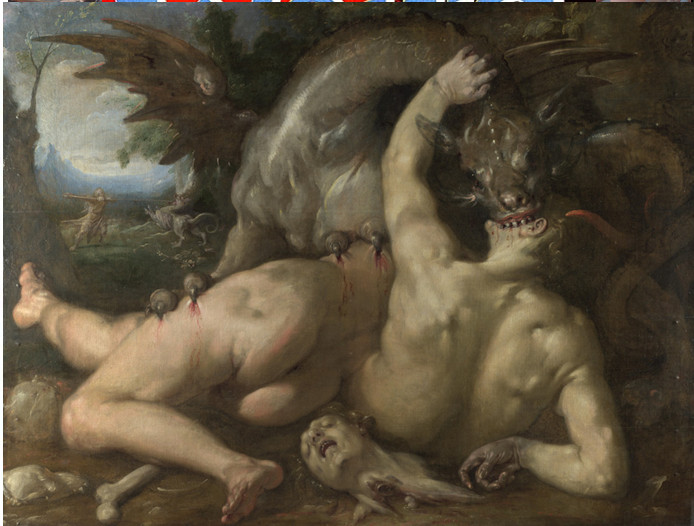
After slaying a dragon, the great hero king Beowulf discovered that he had been bit, and the dragon’s poison was now killing him. As he lay dying he had one last request of his faithful comrade and servant, to gaze upon the dragon’s treasure. 

Fare thou with haste now To behold the hoard ’neath the hoar-grayish stone, Well-lovèd Wiglaf, now the worm is a-lying, Sore-wounded sleepeth, disseized of his treasure. Go thou in haste that treasures of old I, Gold-wealth may gaze on, together see lying The ether-bright jewels, be easier able, Having the heap of hoard-gems, to yield my Life and the land-folk whom long I have governed.”

The heroes in fairytales almost never set out to help another. Rather they set out to find their own fortune, just as the people encountering fairies – when not terrified for their lives – wondered how they might become wealthy off the encounter. This is because heroes and fairies are the dreams of the desperate, of the poorest of people, they are a vicarious outlet. 

Because of this greed, the desire for treasure is a frequent feature of the mythological and fairytale hero’s character, whether it is that they seek treasure or are wealthy such as Bruce Wayne who becomes Batman. Psychology today states that; “Greed often arises from early negative experiences such as parental absence, inconsistency, or neglect. In later life, feelings of anxiety and vulnerability, often combined with low self-esteem, lead the person to fixate on a substitute for the love and security that he or she so sorely lacked. The pursuit of this substitute distracts from negative feelings, and its accumulation provides much needed comfort and reassurance.”

There has been a lot of philosophical debate about the value of greed, yet what’s important is that greed in fictional heroes is a way for those who have suffered to feel a sense of emotional release, which is why characters such as kings, or moments such as ‘Harry Potters’ discovery that his parents left him great wealth are so important. 

Consider heist films. There is a long history of Heist stories and tales of adventurous rogues such as Robinhood being more about skilled friends, working together to obtain some goal, than about obtaining treasure. Robin Hood works with a large band of Merry Men, who constantly exhibit joy in each other’s company, and in the freedom, they have found outside of society. Robin Hood has remained so successful in large part thanks to the fact that he perfectly combines the two most interesting aspects of heist stories. 


At their best heists are about breaking down barriers to enter forbidden spaces and as a rebellion against a repressive society. Julian Hanich has stated that heists are about a “desire to extend spatial options, to resist boundaries set by gates and walls, to rebel against artificially imposed limit.” Equally as important they are about the pleasure of working closely with a group of friends towards a singular goal. Greed is common in stories of companionship. The goal of friends in many stories is to obtain wealth. Yet, as already stated, heist stories aren’t about greed for the audience. They are about working with others towards a goal, and while it’s nice to have friends, it is even better to be working towards a singular goal with those friends. To have a sense of purpose. The search for treasure with friends is what makes stories like “Goonies” so engaging and emotionally satisfying.


The artist Trampier used the power of the heist, of breaking down barriers and friends working together in the art he created to act as the cover for the Advanced D&D Players Handbook by Gary Gygax. This piece of art works because comradery, adventuring together with each character having different skill sets that are needed for the group to succeed is as important to Dungeons and Dragons as it is to heists. Wright, Weissglass, and Casey performed a psychological experiment in which they had some groups play Dungeons and Dragons and found that “imaginative role-playing games can serve as an enjoyable medium for promoting (and protecting) moral growth. In particular, gaming that involves the encounter of morally relevant situations appears to facilitate a shift away from concern for one’s own personal interests and toward the interests of others.” What’s more psychologists have found that Table-Top RPGs help provide psychological gratification in this area. That those who play them feel more fulfilled. Likely because they are more than just friends getting together to passively watch something.


Trampier’s art is able to capture all of this and more. His painting shows the interior of a cult’s temple, a place which evil people forbade entry to. A demonic, and disturbingly fleshy looking statue with ruby eyes takes up most of the space in the painting.


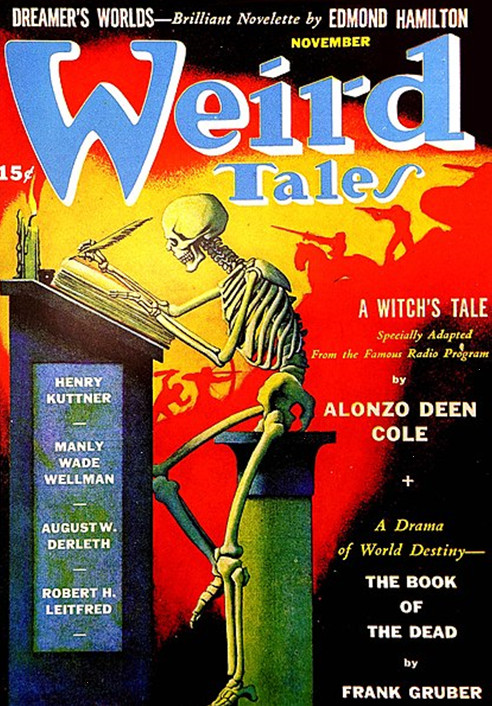
At first glance this painting clearly draws on the sensationalism pioneered by pulp magazine covers to draw attention. Unlike pulp illustrations which promise horror, heroism, and sexually provocative situations Trampier’s painting promises comradery, alliance, and perhaps even friendship. For the terrifying setting, like a heist film, can enhance the depiction of friendship among the pairs of comrades in the painting. 


In the background a pair of people work together to pry the ruby eyes loose from the statue, while in the foreground two sets of companions talk to each other, one pours over a map or old scroll, perhaps seeking a greater treasure they know is in this temple. Between these two groups is another pair of friends, chatting while one is cleaning the blood from dragon like creatures off their sword.


Thus this painting shows greed and the multiple skills of groups of friends, while in the full painting, included on the back of the book, we see more people taking treasure from the temple. This is a victory for the friends, a moment to be celebrated, and one that gives those viewing the painting a sense of adventure and hope.


As with all great works of art, however, there are more layers to this painting than the surface idea. Despite their seeming victory in getting here, none of the companions are celebrating. They seem to feel a sense of trepidation. One of the men trying to pry the ruby from the eye of the statue looks precarious, like they are ready to tumble down at any moment.


In the foreground the companions talking seem uncertain as well, as they pour over a scroll or a map, perhaps trying to figure out their next move. Someone else stands guard over those carrying the treasure. They all seem to know that this isn’t over, that something is about to happen. Yet they, like the viewers of the art don’t seem to know what that is. Perhaps the only one who does is the demon statue, grinning wildly beneath its ruby eyes. 


The year before this painting was released Elvis died and the Apple II and Atari were released. It was as if the old world were being swept away by a new one. The world is, after all, filled with change and uncertainty and this perhaps explains the sense of uncertainty and trepidation one feels when looking at this art. And why no one in the painting is fully relaxed. Certainly the artist Trampier didn’t seem to be relaxed, for he separated the characters by regions of darkness, making one wonder if they might not be the best of friends. 


This separation and tension is perhaps explained by the artist. A few years after completing this masterpiece Trampier left his life and art behind without telling anyone. For a time many thought he might have died, but as it turned out he simply left his old life and began driving a cab. When people found this out years later, he was offered a number of jobs related to art and RPGs but he refused them all. For reasons we will never know he felt disconnected from the others in the fantasy industry, and eventually didn’t want to have anything to do with them.


Yet in the short time he worked Trampier still left us with some of the most evocative works of art, which manage to balance depictions of deep seated human desires and anxieties.

Villains, Antagonists, and Foils Fantasy for Artists - p14

 Previous                  Index                 Next

Villains, Antagonists and Foils

by Ty Hulse

“The oldest and strongest emotion of mankind is fear, and the oldest and strongest kind of fear is fear of the unknown” ― H.P. Lovecraft, Supernatural Horror in Literature

 Humans have long been strangely drawn to the villains of stories, which is why we have so frequently turned the terrifying into the romantic, such as has happened with Vampires. The Romanticists were “Mesmerized by the villain, by strangeness in beauty, by the corrupt and contaminated, the imperiled.” (Lutz) 


Villains are freeing to write and so freeing to be an audience for. Villains can be wild, unpredictable, and fun. Unlike heroes neither the writer nor the audience needs to worry about understanding their every action. Instead, we can simply watch them enjoy themselves. Notice that in anime the villains are the ones who are always giggling, always gleeful. Similar to the villains of anime whose actions often bring philosophical debate the villains in Gothic literature often create complexity through “inexplicably meaningful actions.” In a similar vain T.S. Elion stated “it is better, in a paradoxical way, to do evil than to do nothing: at least, we exist”

 In Medieval Romances fairies most often acted as supernatural challenges for the otherwise invincible heroic knights of these stories. These fairies act as tests that help to define knighthood and prove the knights worth. The fairies “ultimate freedom from moral constraints, combined with their propensity for arbitrary or illogical behavior, and, most visibly, their unmatched supernatural powers, make them dangerous beyond the normal – dangerous in ways that other adversaries, such as rival knights, opposing armies, or even giants and dragons, are not.” (Wade) What separates them from all else is their unknown, strange, and downright alien nature. Fairies never acted as expected, they created worlds that had different moral and logical rules than the knight would be used to dealing with. This makes the fairy the most dangerous and interesting challenge.


Fairies can serve a similar function in fairytales, for while the characters in these stories aren’t great warriors but poor peasants seeking their fortune, the fairies in these stories often act as a moral test for the heroes. Testing their cunning, work ethic, kindness, willingness to listen to the wisdom of others [especially their elders], and other similar traits necessary to the survival of ordinary people. The purpose of fairies in stories is to challenge the very nature of the hero in ways no physical threat could. When fairies were at their worst they were often depicted as being like the noble court, except without a purpose, they celebrate and go through the motions of nobility but serve nothing and no one. In fairy tales, ogres too represent a cruel nobility, they were depicted as living in mansions, and wishing to devour or force the peasants into work. Their constant thought was how they could exploit others. We no longer use fairies this way but in modern stories characters like Lex Luther and the Joker who act as agents of chaos and make Superman and Batman, respectively, question who they are, are good examples of the fairy type of villain. 


The best villains in stories are often meant to act as moral and philosophical foils to their heroes. “Heroes and villains can present us with the challenge to transformation, possibly enabling us to see ourselves and others in a new light. The heroes and villains continually thrown up by human imagination can be seen as powerful prototypes representing the extremes of human response to boundary situations.” (Heroes and Villains By Mike Alsford)

With this in mind it becomes obvious why Tolkien, who had nearly died in the first major mechanized war made his villains cruel technocrats with no concern for the natural and good things of the world. 


The Orcs, and by extension, the UrukHai are consumed by their work, by hardship and by cruelty. They are bedraggle depressed, violent, are completely disenfranchised and have no sense of compassion, intimacy or sense of social intercourse. They are the effect that industrialization and mechanization has had on society. They have no pride, they have no honor and they have no reason for being except to work, to produce and to consume.

 Orcs were elves that were tortured and twisted by power hungry and greedy men, just as Tolkien felt that the greedy and power hungry autocrats twisted humanity into ugly and industrial colonists. Orcs represent the worst aspects of Europeans, the cruelty and maliciousness they hold for those outside themselves and the hate they even hold for each other. 


"Do you know how the Orcs first came into being? They were elves once, taken A ruined and terrible form of life" (Tolkien 442). It is through descriptions like this that we are led to the realization that industrialization, technological “advancement” such as bio-engineering and mechanization lead to a twisting and negation of all of those aspects of humanity which make us human. It is through too much greed, too much yearning for knowledge and too much of any good thing that leads to something perverse. What is good, beautiful, useful and sustainable can indeed be too much if it is used in the wrong way, for the wrong purpose. (Hewitt)

Making industrialization the enemy reflects Tolkien’s own view of trees for which he acknowledges a deep love. He says in one of his letters: “I am (obviously) much in love with plants and above all trees, and always have been; and I find human maltreatment of them as hard to bear as some find ill-treatment of animals” (Tolkien, Letters, 233). He adds, “I take the side of trees against all enemies” (qtd. In Curry55).

Having clear cut evil villains and empires within a story, such that the good heroes can easily defeat the problems of the world has psychological value for audiences, as does having heroes with “pure motivations, a redemptive task and extraordinary powers” (Lawrence and Jewett, 2002).


Dragons & Altruism Fairy Tales and Fantasy for Artists - p6

 Previous                  Index                 Next

Dragons: The Need for Altruism and Heroism

Ty Hulse

People are drawn to fantasy because they want to be heroic and they want a hero for themselves. Black and white worlds have long been an instructive tool for helping people through emotionally turbulent times. Many people naturally feel an urge for adventure, for the opportunity to be the hero. This drive makes sense in a world where humans once needed heroes that would protect the village from the sabertoothed cat. This need for heroism doesn’t just manifest in physical ways. In many stories a protagonist will help someone from the wrong side of the tracks to open up emotionally. Consider the stories of “Twilight” and other Paranormal Romances. In these stories a person, usually a man, needs to be rescued from their own emotional and psychological inadequacies, as well as from a society that they struggle to exist within. 


The desire readers have for someone to come and help this poor emotionally and psychologically weak character is much the same as the desire to help a physically weak one. Both stories are about helping others overcome some inadequacy as a way of bonding with them. Obviously, such stories are made stronger when the target of the aid is a potential romantic partner or children, those it makes sense for us to be instinctively geared to protect. Thus, the reason that paranormal fantasy typically depicts the woman psychologically rescuing the socially and emotionally weak or scared, yet still desirable man. 


It is perhaps because of the desire to act the hero that people tend to enjoy witnessing acts of heroism, and by now most of us have likely heard the theory of “saving the cat” in order to get an audience to identify with a character. The act of rescuing and helping someone, especially something cute, works to endear an audience to a character because we intrinsically feel a desire to be protected – and so like those who might protect us.


Peoples desire to see altruistic and heroic behavior is confirmed by psychological studies. For although many aspects of a character can influence how the audience feels about the character "studies consistently demonstrate that moral considerations (especially ones related to empathy) are central to liking a character." According to research by the psychologist Farrelly “altruism was rated more desirable, particularly for long term relationships, by both men and women.”


It makes sense for people to not only like to witness displays of altruism then, but to also fantasize about being altruistic and heroic and fantasy provides a perfect and safe vehicle for people to explore these desires. As importantly, evidence indicates that such displays of altruism in a movie can increase empathy and altruism in the viewers. Meaning that showing people acts of heroism can make people more likely to care about others like the person who is depicted as needing to be rescued. 


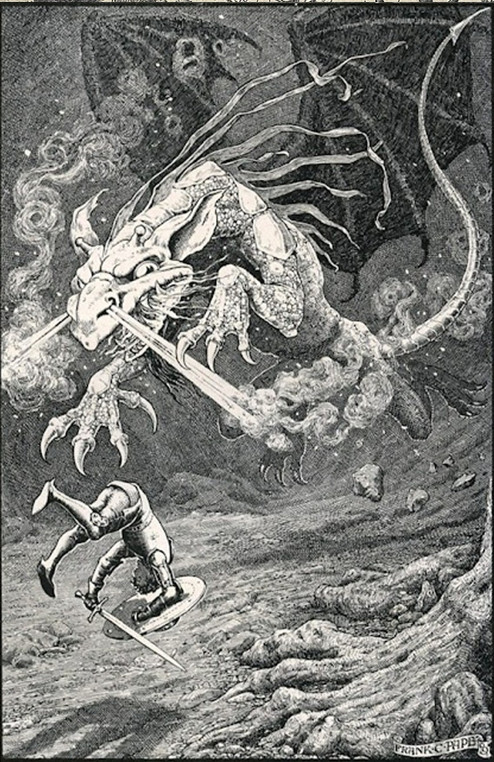
Battling dragons is the perfect vehicle for showing heroics and a character’s altruism, because dragons represent so many of the things that would prime us to feel a desire to protect others. Being larger than life, dragons can be used to make us feel immediate concern for the hero that is meant to be fighting them. The predatory nature of the dragon certainly, but also their role as an awe-inspiring force of nature. Feelings of awe related to media have been found to increase feelings of empathy in people, and few things are so awe inspiring as a dragon. It makes sense than for ideas of empathy to get wrapped up with the notion of a dragon.


Henry Justice Ford "End of the Dragon


Geeks-Fairy Tales and Fantasy for Artists - p3

 Previous                  Index                 Next

Geeks, Wild People, and Fairies

by Ty Hulse

Because most fantasy stories use imaginative and dreamlike narratives to show characters that escape the restraints of their society, they often attract the attention of those who live on the emotional frontiers of society. It is no wonder then that the word for those who love fantasy stories to an abnormal degree ‘Geek’, was originally a term for a wild person, someone who lived on the fringes of society. Indeed, it was still used that way in the 1970s such that a low budget porn film which featured Bigfoot was released titled “Geek”. This wasn’t a slam on the people who would later be called geeks, the masters of technology and the readers of fantasy worlds. This film used the word as another name for bigfoots, people living on the fringes, or circus freaks. In the “Wildmen on the Cyberfrontier” Buhs writes that “The geek is an update of an ancient type – the wild man.” In the 1970s and 80s, geeks began to fill the roles that fey and wildmen of folklore once had. Folktales and rumors spread of them, and their interests became things to fear. Computer Geeks, the first people who were called geeks had magical powers through the use of the computers. Computers which it was believed would destroy jobs, ruin our culture, and ultimately endanger us all. The tech revolution was referred to with similar terms that the cannibal and the dangerous wilderness once had been. 

Computer Geeks were often seen as “dangerous, amoral boys who threatened the struggling middle class… many of them adopted punkish dress. .. like the wildmen that came before them geeks were often only known by ‘a vaporous trail of footprints,’ invisibility being one more reason to be frightened [of them].”Geeks were seen as having powers beyond mere mortals, drivers of the economies on which the modern world was dependent, yet also troublemakers who could use computers to pilfer money and cause mischief. This status of clever social outsiders was extended to include the readers of imaginative art, for the greatest function of such art is helping people through their struggles. 


It makes sense than that at this time those who loved fantasy would have similar terminology applied to them. After all, in the 80s and the early 90s those who played Dungeons and Dragons were believed to be dangerous, and threatening. Police, psychologist and reporters investigated those who loved fantasy and the impact their interests had on them and society as a whole. Of course, the fears of these people were unfounded. As we will discuss further, it has been found that fantasy, comic books, romance and Dungeons and Dragons will often do exactly the opposite of what it was feared to, and psychologist have even found positive impacts associated with playing D&D. Philosophy and guessing the impact of a story are wrong more often than right, which is why one must always balance their guesses with careful psychological research. 


Fairy Tales and Fantasy for Artists - p8

 Previous                  Index                 Next 

Cuteness, Love, and Protectiveness  

By Ty Hulse

Cuteness has the power to tap into many of our most primal urges; nostalgia and sentimentality, the desire to protect others, the joy of play, and a hope for pure friendships. Cuteness in fantasy has been used for all these things, not just in children’s stories but in epics such as “Lord of the Rings” and “Dragons of Autumn Twilight”.


Tolkien’s Hobbits with their small size and idealized lifestyle are in many ways cute, or at least they fulfill the same role as cute creatures do. They are something to protect, something to engender the sentimentality of imagined country life in the audience, and of course they are ‘pure’ beings who are the best friends one could ever hope for. As a result they draw the readers into the story, making them want to protect these tiny and innocent people. In the novel “Dragons of Autumn Twilight” by Margret Weis and Tracy Hickman the character ‘Tasslehoff Burrfoot’ fills the same role. He is small, silly, and often acts in a way we would associate with being cute. This allows him to act as the heart of the group of friends during the evil and difficult times they face. In each of these cases, cuteness makes it easier for people to long for a friendship like the one represented in the story. 

This longing for friendship and protectiveness is one of the primary reasons “My Little Pony” became a surprise hit among adult male audiences. 

cuteness is an aestheticization of powerlessness because of its relationship to the childlike. Ngai concurs, adding that part of the appeal of cuteness lies in its vulnerability… Cuteness, seeming to have a will of its own, also demonstrates aggression by imposing demands. For example, it may demand that we allow it to submit to us. Its immediate visceral impact is often counteracted by the viewer’s sense of having been manipulated, arousing the viewer’s suspicions. It desperately awaits our evaluation of and interaction with it. It is a supplicant awaiting our judgment, a judgment that will give it power over us. Cuteness thereby engenders its own discipline by enforcing particular behaviors of the viewer; in turn, it engages and disciplines its viewer. Its disavowal of power is one of its powers. (Elizabeth Howie)

As already stated, these are powerful and primal emotions, which likely explains why cuteness is so often used in relation to objects of religious art. Claire Maria Chambers points out that Korean Buddhist temples have figures of small chubby monks and “temple devotees ritually bathe a statue of the Buddha as a small boy.” In America Precious Moments toys have become important to a number of Christians. These cute, innocent figurines, often include spiritual and biblical quotes. They are like children but better, “they also sincerely express experiences of comfort, love, and community in the face of the difficulties that the riddle of faith presents for thousands of consumers around the globe.” (Claire Maria Chambers) 


Like cute art, fantasy arts have often been created as a person’s striving for beauty that the rest of the world doesn’t always fully embrace. At one time, of course, depictions of elves, gnomes, and fairies were dominated by cute art. Yet after some of the most talented illustrators poured their hearts into creating these works, they fell away, leaving those who loved this type of art as semi-outsiders – at least within the art community and the mainstream of what was considered intelligent and high art. 


Further, fantasy taps into many of the same emotions as cuteness. Fantasy can frequently represent a desire for comradery, a desire to be loved and cared for and to care for and protect others. The heroes of modern fantasies protect the helpless, often with the help of companions who fight beside and aid them. This desire to protect, bond, and be protected is what allows humans and society to exist. It is the most intrinsic and important of human desires. ‘


Adams (2013) points out that: “On the surface, the fantasy tabletop roleplaying game Dungeons and Dragons may appear to be a game of simple make-believe. However, the emotions, camaraderie, and accomplishments experienced in the game are real; thus, suggesting that real world needs are met through communication in socially constructed RPG scenarios.” 


People who are more likely to feel alienated and cultural estrangement are the ones who are more likely to play D&D and the amount of money a person “spent on game materials was positively correlated with feelings of general alienation.” That is, people who need to feel a sense of community the most, spend the most money on D&D. For its part D&D does seem to help reduce a person’s sense of meaninglessness while allowing players to belong to a group, and “belonging to a group of people with similar interests could increase one's sense of purpose.” (DeRenard and Kline)


The most popular fantasy game, like cute art and gifts of Christmas sweaters is correlated with a desire to belong, to be a part of other people’s lives. 


Cuteness can serve another narrative role besides friendship, protectiveness, sentimentality, etc. 


Thomas LaMarre, analyzing the figure of the child in Hayao Miyazaki’s films, contends that “Miyazaki’s children or tweens are not so much about purity or innocence as about a sensory-motor openness, elasticity, and malleability. The child does not simply return you to the old pretechnological world but opens the possibility of a post technological world” 


Part of the charm of the cute object is its seeming stasis, permanence, and resilience—qualities that contribute to a sense of security. Cuteness, as much as it allows for temporal fantasies, remains outside of time. The child does not grow up. Frances Richards suggests that cuteness “stabilizes infancy, or the frailty of old age (Jen Boyle)


By presenting us with something cute we are returned to childhood and perhaps more importantly, potentially to the past, to a time of wilderness. This is perhaps one of the primary reasons why fairies were made cute in so many Victorian works of art. Because by making the fairies small they came to represent the idealized past and in a way, a hope that there could be a better future. 


Nenkov and Scot state that “exposure to whimsically cute products primes mental representations of fun, increasing consumers' focus on approaching self-rewards and making consumers more likely to choose indulgent options. 


So it may be that when something is cute that we don’t have to take care of, but which might potentially take care of us, we are able to let ourself go. Fairies, with their incredible powers and ancient age are such a being. We don’t necessarily have to take care of them, indeed they might take care of us after they invite us to celebrate and have fun with them. After all, whimsically cute things can lead people to watch more ‘low brow’ and fun films. 


By a similar token, cute things that one knows one doesn’t have to take care of can heighten emotions in other ways, specifically increasing fear. When confronted by a child that is a ghost or a doll that is possessed by a demon, we experience dissonance that comes from the contrast between its cute and innocent nature and the fact that it is murderous and dangerous. This can heighten the effects of fear. 


Christmas Sweaters. Love and Cuteness. 
The Voice of the Voiceless. 

When many people wish to express love or affection, they turn to something cute such as teddy bears given as gifts on Valentine’s Day. Another example are Christmas sweaters historically knitted by an aunt or Grandmother. The first Christmas sweaters weren’t ironic or ugly, they were artistic expressions by people who had spent much of their life with a limited ability to express themselves. Handmade cute sweaters reflect a desire to care for others. They are knitted by loving hands, often as a present. In this they reflect both the desire to love and to be loved and on some deep level we realize this, this is why people wear them when the maker comes to visit, because they are demonstrating this affection or at least comforting the creator with a forced display of affection. 

Rather than trying to understand the aesthetic or emotions behind these works of art, however, society derided the creators, regulating them to kitsch to later be used as the butt of jokes. It is common for people to deride and belittle cute art without ever trying to fully understand its function in people’s life. This is the danger of creating cute art, that it will be not only misunderstood but wrongfully looked down upon. 

Kitsch art brings joy

Cute art matters and is loved, even if some people think of it as kitsch. It is rather amusing to read art Critics who support an industry of artists selling art for thousands or even millions of dollars, deriding the happiness that a teenager or elderly person can get from giving five dollars for something to place of their shelf or hang on their wall. Kisch, in essence, means that many people with little money are able to take joy in it – while ‘high art’ means something that only a single wealthy person owns and few well ever enjoy. I imagine the wealthy art collectors take joy in their million dollar while kicked back in a leather chair while sipping on cognac that costs more than an average person’s yearly wages. I don’t have a problem with this, joy is joy, after all. Still, why would we ever seek to take that opportunity away from the teen sitting on their bed, with a cookie they shouldn’t be eating there, staring silently and the affordable art around their room as they contemplate their life and future? Or the elderly person, rested in a mechanical chair, pondering the world that they’ve been a part of while absently staring at the knickknacks they’ve chosen to represent themselves.

So, what does this have to do with fantasy art?

Like cute art, fantasy arts have often been created as a sort of act of rebellion. A person’s striving for beauty that the rest of the world doesn’t always fully embrace. At one time, of course, depictions of elves, gnomes, and fairies were dominated by cute art. Yet after some of the most talented illustrators poured their hearts into creating these works, they fell away, leaving those who loved this type of art as semi-outsiders – at least within the art community and the mainstream of what was considered intelligent and high art. 

Further, fantasy taps into many of the same emotions as cuteness. Fantasy can frequently represent a desire for comradery, a desire to be loved and cared for and to care for and protect others. The heroes of modern fantasies protect the helpless, often with the help of companions who fight beside and aid them. This desire to protect, bond, and be protected is what allows humans and society to exist. It is the most intrinsic and important of human desires. ‘

Adams (2013) points out that: “On the surface, the fantasy tabletop roleplaying game Dungeons and Dragons may appear to be a game of simple make-believe. However, the emotions, camaraderie, and accomplishments experienced in the game are real; thus, suggesting that real world needs are met through communication in socially constructed RPG scenarios.” 

People who are more likely to feel alienated and cultural estrangement are the ones who are more likely to play D&D and the amount of money a person “spent on game materials was positively correlated with feelings of general alienation.” That is, people who need to feel a sense of community the most, spend the most money on D&D. For its part D&D does seem to help reduce a person’s sense of meaninglessness while allowing players to belong to a group, and “belonging to a group of people with similar interests could increase one's sense of purpose.” (DeRenard and Kline)

The most popular fantasy game, like cute art and gifts of Christmas sweaters is correlated with a desire to belong, to be a part of other people’s lives. 

Cuteness can serve another narrative role besides friendship, protectiveness, sentimentality, etc. 

Thomas LaMarre, analyzing the figure of the child in Hayao Miyazaki’s films, contends that “Miyazaki’s children or tweens are not so much about purity or innocence as about a sensory-motor openness, elasticity, and malleability. The child does not simply return you to the old pretechnological world but opens the possibility of a post technological world” 

Part of the charm of the cute object is its seeming stasis, permanence, and resilience—qualities that contribute to a sense of security. Cuteness, as much as it allows for temporal fantasies, remains outside of time. The child does not grow up. Frances Richards suggests that cuteness “stabilizes infancy, or the frailty of old age (Jen Boyle)

By presenting us with something cute we are returned to childhood and perhaps more importantly, potentially to the past, to a time of wilderness. This is perhaps one of the primary reasons why fairies were made cute in so many Victorian works of art. Because by making the fairies small they came to represent the idealized past and in a way, a hope that there could be a better future. 

Nenkov and Scot state that “exposure to whimsically cute products primes mental representations of fun, increasing consumers' focus on approaching self-rewards and making consumers more likely to choose indulgent options. These effects do not emerge for kindchenschema cute stimuli, since they prime mental representations of vulnerability and caretaking. Four empirical studies provide evidence for the proposed effects and their underlying process.”

So it may be that when something is cute that we don’t have to take care of, but which might potentially take care of us, we are able to let ourself go. Fairies, with their incredible powers and ancient age are such a being. We don’t necessarily have to take care of them, indeed they might take care of us after they invite us to celebrate and have fun with them. After all, whimsically cute things can lead people to watch more ‘low brow’ and fun films. 

By a similar token, cute things that one knows one doesn’t have to take care of can heighten emotions in other ways, specifically increasing fear. When confronted by a child that is a ghost or a doll that is possessed by a demon, we experience dissonance that comes from the contrast between its cute and innocent nature and the fact that it is murderous and dangerous. This can heighten the effects of fear.