Monday, November 19, 2012

Lima (Lithuanian Fairy)

 The weavers of fate in Lithuanian and Latvian lore. They were depicted as females and were at times considered to be the sister of the GiltinÄ— (a female Grimm Reaper figure) for it was believed that while she controlled birth and life the GiltinÄ—  controlled peoples ends. As with much of Europe Fate wasn't a prediction, it was something the Lima controlled, something they made happen. In one a Lima blesses a boy that he will become wealthy and live happily and than descends from the heavens to draw circles which protect the child from evil when he is alone (The circles than grow flowers). When the boy grows up the Lima aids him in marrying a wealthy merchants daughter.
In order to insure the Lima's favor woman would cray out to the goddess of happiness and of the earth. In addition the husband and wife would act as the perfect family immediately after the birth in a ritualistic way in which the mother would happily greet the father who in turn would pray for the mother and baby and than take a drink to the earth. After which he would ask “Blossom in our rye, wheat, and be gracious child. They would than get together and sacrifice hens, which had to be black, white or speckled but never red. They and the midwife and other woman would than all eat boiled chicken while the midwife prayed for their health and happiness.

Part of the Encyclopedia Fairy List

LaumÄ—s


Part of the Fairy List Encyclopedia. 


The LaumÄ—s are female fairy like creatures. Much of the beliefs about the LaumÄ—s, especially those of them as anthropomorphous creatures likely goes back to the Neolithic or even pre-Neolithic era.
Fairy like beings who would often appear as birds such as pigeons. They lived in rocks and trees, especially birch trees and often appeared as woman with goats horns, heads, legs, and overly large breasts, or at times with chicken legs. They could also take the form of other animals such as cats, dogs, horses, and bears. Although they would later evolve to aid in farming and choirs the LaumÄ—s were originally hunting spirits.
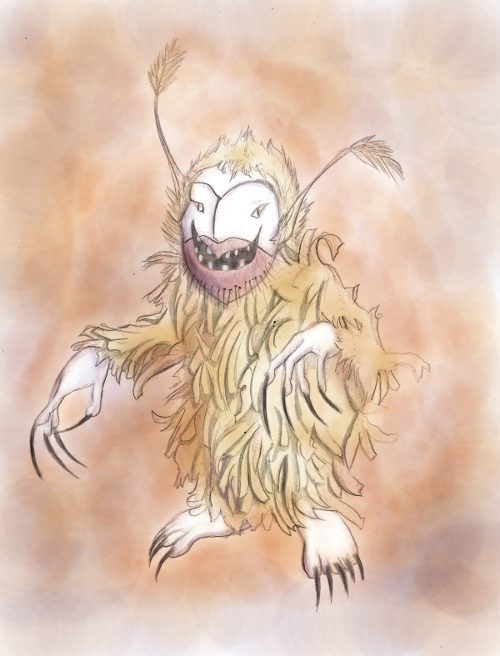
Some of these fairies craved the taste of human flesh. These were depicted as having long spindly arms tipped with claws made of stone, large teeth and large breats. The more dangerous LaumÄ—s would live in the forest canopy, abandoned baths, or the waters. As with most fairies iron injured and kept them at bay.
In other cases LaumÄ—s was depicted as beautiful girls with gold clothes (when they weren't naked) which would often carry the body of a chicken with them. In some tales the LaumÄ—s decended from the sky into the forests, mountain caves, lakes, swamps or islands. On earth they help humans and act to guard morality, giving gifts to the virtuous and punishing the wicked. They especially hated greet and sloth and would punish those who exhibited these traits.
 They would come out to dance on the new moon and sing and dance, causing it to rain, hail and storm in their delight.
They would also come out on the nights of the full moons when they would gather in dewy meadows and dance in merry circles. The LaumÄ—s had a strong relationship to rain, especially to rainbows for it was believed that they would weave the colorful band into the sky.
Because of their importance in insuring a good harvest they were often offered bread and beer as gifts to insure their help making the fields fertile. Other offerings included silk ribbons and soup (left in the bathhouse for them).


Lithuanian Spirits of the Harvest


We are putting together the most extensive list and study of fairies online.

JavinÄ— (Lithuanian)
The goddess of the grain barn she was a household fairy type figure who protected barns and food storage.

Jievaras
A Lithuanian female spirit of the grain fields, she was offered bred and cheese in return for a good harvest. Believed to reside in the last bit of uncut rye so that during the harvest woman would leave a few small patches of grain uncut for her to reside in. These would later be braided and offerings of bread and salt left under them when the harvest was finished.

Laukų dvasios (Lithuania)
Sprits of the field who could appear as nude woman, Kiškis (hare), Meška (bear), Lapė (fox), Katinas (tomcat), Bubis, Bubas, Bubė, Baubas, Babaužis, Bobas, Maumas (bugaboo), Raudongalvis (red-headed), Raudongerklis (red-throated), Žaliaakis (green-eyed), Paplėštakis, Guda, Dizikas, Smauglys (boa), Ruginis (spirit of rye), Papiokė, Pypalas, Žebris, Arklys (horse), Vilkas (wolf).

Mother Žeminyke (Lithuanian)
The spirit of the good harvest. If a good harvest is desired one should sprinkle bread crumbs in the fields and pray to Mother Žeminyke to make the grain grow.

Rugių boba
The last cut rye or wheat sheaf in the field. Typically imagined and female and often portrayed as a motherly figure to which chickens might be sacrificed.

Information extracted from "The Golden Bough"

According to another account, every Lithuanian reaper makes haste to finish his task; for the Old Rye-woman lives in the last stalks, and whoever cuts the last stalks kills the Old Rye-woman, and by killing her he brings trouble on himself. In Wilkischken, in the district of Tilsit, the man who cuts the last corn goes by the name of “the killer of the Rye-woman.” In Lithuania, again, the corn-spirit is believed to be killed at threshing as well as at reaping. When only a single pile of corn remains to be threshed, all the threshers suddenly step back a few paces, as if at the word of command. Then they fall to work, plying their flails with the utmost rapidity and vehemence, till they come to the last bundle. Upon this they fling themselves with almost frantic fury, straining every nerve, and raining blows on it till the word “Halt!” rings out sharply from the leader. The man whose flail is the last to fall after the command to stop has been given is immediately surrounded by all the rest, crying out that “he has struck the Old Rye-woman dead.” He has to expiate the deed by treating them to brandy; and, like the man who cuts the last corn, he is known as “the killer of the Old Rye-woman.” Sometimes in Lithuania the slain corn-spirit was represented by a puppet. Thus a female figure was made out of corn-stalks, dressed in clothes, and placed on the threshing-floor, under the heap of corn which was to be threshed last. Whoever thereafter gave the last stroke at threshing “struck the Old Woman dead.” We have already met with examples of burning the figure which represents the corn-spirit.

In Wolf Form
WE begin with the corn-spirit conceived as a wolf or a dog. This conception is common in France, Germany, and Slavonic countries. Thus, when the wind sets the corn in wave-like motion the peasants often say, “The Wolf is going over, or through, the corn,” “the Rye-wolf is rushing over the field,” “the Wolf is in the corn,” “the mad Dog is in the corn,” “the big Dog is there.” When children wish to go into the corn-fields to pluck ears or gather the blue corn-flowers, they are warned not to do so, for “the big Dog sits in the corn,” or “the Wolf sits in the corn, and will tear you in pieces,” “the Wolf will eat you.” The wolf against whom the children are warned is not a common wolf, for he is often spoken of as the Corn-wolf, Rye-wolf, or the like; thus they say, “The Rye-wolf will come and eat you up, children,” “the Rye-wolf will carry you off,” and so forth. Still he has all the outward appearance of a wolf. For in the neighbourhood of Feilenhof (East Prussia), when a wolf was seen running through a field, the peasants used to watch whether he carried his tail in the air or dragged it on the ground. If he dragged it on the ground, they went after him, and thanked him for bringing them a blessing, and even set tit-bits before him. But if he carried his tail high, they cursed him and tried to kill him. Here the wolf is the corn-spirit whose fertilising power is in his tail.
Sometimes it appears to be thought that the Wolf, caught in the last corn, lives during the winter in the farmhouse, ready to renew his activity as corn-spirit in the spring. Hence at midwinter, when the lengthening days begin to herald the approach of spring, the Wolf makes his appearance once more. In Poland a man, with a wolf’s skin thrown over his head, is led about at Christmas; or a stuffed wolf is carried about by persons who collect money. There are facts which point to an old custom of leading about a man enveloped in leaves and called the Wolf, while his conductors collected money.


Cock Form
Near Udvarhely, in Transylvania, a live cock is bound up in the last sheaf and killed with a spit. It is then skinned. The flesh is thrown away, but the skin and feathers are kept till next year; and in spring the grain from the last sheaf is mixed with the feathers of the cock and scattered on the field which is to be tilled. Nothing could set in a clearer light the identification of the cock with the spirit of the corn. By being tied up in the last sheaf and killed, the cock is identified with the corn, and its death with the cutting of the corn. By keeping its feathers till spring, then mixing them with the seed-corn taken from the very sheaf in which the bird had been bound, and scattering the feathers together with the seed over the field, the identity of the bird with the corn is again emphasised, and its quickening and fertilising power, as an embodiment of the corn-spirit, is intimated in the plainest manner. Thus the corn-spirit, in the form of a cock, is killed at harvest, but rises to fresh life and activity in spring. Again, the equivalence of the cock to the corn is expressed, hardly less plainly, in the custom of burying the bird in the ground, and cutting off its head (like the ears of corn) with the scythe.


https://www.amazon.com/dp/1076284515/ref=cm_sw_r_tw_dp_U_x_p7y6DbMZ8D3WV 

In Hare Form

In East Prussia they say that the Hare sits in the last patch of standing corn, and must be chased out by the last reaper. The reapers hurry with their work, each being anxious not to have “to chase out the Hare”; for the man who does so, that is, who cuts the last corn, is much laughed at. At Aurich, as we have seen, an expression for cutting the last corn is “to cut off the Hare’s tail.” “He is killing the Hare” is commonly said of the man who cuts the last corn in Germany, Sweden, Holland, France, and Italy. In Norway the man who is thus said to “kill the Hare” must give “hare’s blood,” in the form of brandy, to his fellows to drink. In Lesbos, when the reapers are at work in two neighbouring fields, each party tries to finish first in order to drive the Hare into their neighbour’s field; the reapers who succeed in doing so believe that next year the crop will be better. A small sheaf of corn is made up and kept beside the holy picture till next harvest.


As a Goat
FURTHER, the corn-spirit often appears in the form of a goat. In some parts of Prussia, when the corn bends before the wind, they say, “The Goats are chasing each other,” “the wind is driving the Goats through the corn,” “the Goats are browsing there,” and they expect a very good harvest. Again they say, “The Oats-goat is sitting in the oats-field,” “the Corn-goat is sitting in the rye-field.” Children are warned not to go into the corn-fields to pluck the blue corn-flowers, or amongst the beans to pluck pods, because the Rye-goat, the Corn-goat, the Oats-goat, or the Bean-goat is sitting or lying there, and will carry them away or kill them. When a harvester is taken sick or lags behind his fellows at their work, they call out, “The Harvest-goat has pushed him,” “he has been pushed by the Corn-goat.” In the neighbourhood of Braunsberg (East Prussia) at binding the oats every harvester makes haste “lest the Corn-goat push him.” At Oefoten, in Norway, each reaper has his allotted patch to reap. When a reaper in the middle has not finished reaping his piece after his neighbours have finished theirs, they say of him, “He remains on the island.” And if the laggard is a man, they imitate the cry with which they call a he-goat; if a woman, the cry with which they call a she-goat. Near Straubing, in Lower Bavaria, it is said of the man who cuts the last corn that “he has the Corn-goat, or the Wheat-goat, or the Oats-goat,” according to the crop. Moreover, two horns are set up on the last heap of corn, and it is called “the horned Goat.” At Kreutzburg, East Prussia, they call out to the woman who is binding the last sheaf, “The Goat is sitting in the sheaf.”


According to one view, the corn-spirit, who has been caught in the form of a goat or otherwise, lives in the farmhouse or barn over winter. Thus, each farm has its own embodiment of the corn-spirit. But, according to another view, the corn-spirit is the genius or deity, not of the corn of one farm only, but of all the corn. Hence when the corn on one farm is all cut, he flees to another where there is still corn left standing. This idea is brought out in a harvest-custom which was formerly observed in Skye. The farmer who first finished reaping sent a man or woman with a sheaf to a neighbouring farmer who had not finished; the latter in his turn, when he had finished, sent on the sheaf to his neighbour who was still reaping; and so the sheaf made the round of the farms till all the corn was cut. The sheaf was called the goabbir bhacagh, that is, the Cripple Goat. The custom appears not to be extinct at the present day, for it was reported from Skye not very many years ago. The corn-spirit was probably thus represented as lame because he had been crippled by the cutting of the corn. Sometimes the old woman who brings home the last sheaf must limp on one foot.

Aitvaras


Lithuanian being of the fairy and dragon type.

An old man found a cold trembling little chicken outside in the rain, feeling sorry for the little animal he brought it home with him but soon discovered that it wasn't a chicken at all but an Aitvaras. Within a few days the Aitvaras had started bringing him money and grain, but the problem was that the Aitvaras was stealing these from the old mans neighbors. For while the Aitvaras is intensely loyal like many domestic spirits of Northern origin he is also a thief. 
Being honest the old man couldn't enjoy his new found fortune so he tried to come up with a plan to get away from the Aitvaras. Eventually he had his neighbors burn his house while he ran to his new house but the Aitvaras emerged from the fire as a spark and traveled with him to live in his new place for it is nearly impossible to kill an Aitvaras. When they die they become a spark or a fury burst which can become them again. 
Born from falling meteorites the Aitvaras is perhaps one of the most interesting cases of internally duelistic creatures in Lithuania, for they most often appeared as a bird (rooster, heron, or crow) which would help people with their choirs, with the harvest while bringing gifts of food, money, amber beats and flowers (for girls). At the same time, however, the Aitvaras could turn into a giant fiery flying serpent or a whirlwind. 
In ancinet myths they would drink up and destroy the water causing droughts until the Perkūnas defeated them in battle. Thus this is both a house fairy and a destructive dragon at the same time.

* * * * *

Zeluan is currently working on a comprehensive fairy list for writers, artists, and those researching ancient belief.s 


Sunday, November 18, 2012

My Favorite Fairy Tales - The Hedley Kow

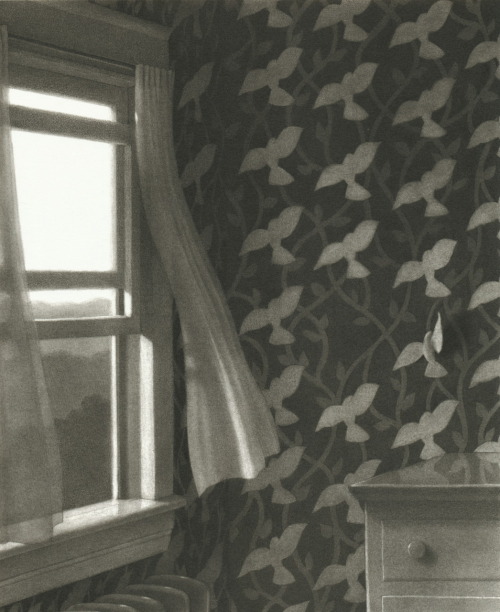
When I read or hear The Hedley Kow I am reminded of the book "Mysteries of Harris Burdick" by Christ Van Allsburg which gives us one page illustrated glimpses into this strange magical world (one of which is pictured to the right). These illustrations stir the imagination quickly, sort of introduce someone to this magical world, but leave everything open ended. I like it when fairy tales do this.

Further the Hedley Kow can be one of the funniest stories in the world, if it's told by the right person. However, if the story teller doesn't get the timing right than it will fall flat. In other words the Hedley Kow reminds us that fairy tales are best when they are told.

Growing up in America we seemed to tend to focus on the Grimm's Brothers, and they have good stories, but I've found that the best fairy tales seem to reside on the outskirts of Europe and Asia rather than in their hearts. in places like England. Places where the fairy and the stories about them were important for a long time.

Read "The Hedley Kow" and about other English Fairies.

Friday, November 16, 2012

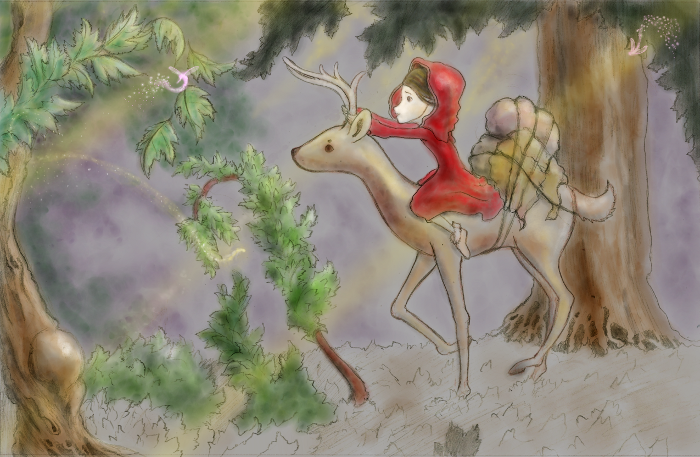
Little Red Riding Hood Riding Through the Fairy Forest

Of course Little Red Riding Hood rides into the still strangeness of the fairy forest... As a folklorist I'm always trying to understand what was happening in fairy tales, of course as an artist and writer I often make stuff up just to be weird. Though fyi, I like the version of Little Red Riding Hood better where she is a trickster figure who escapes from the wolf.

You can get a print of this work at

Thursday, November 15, 2012

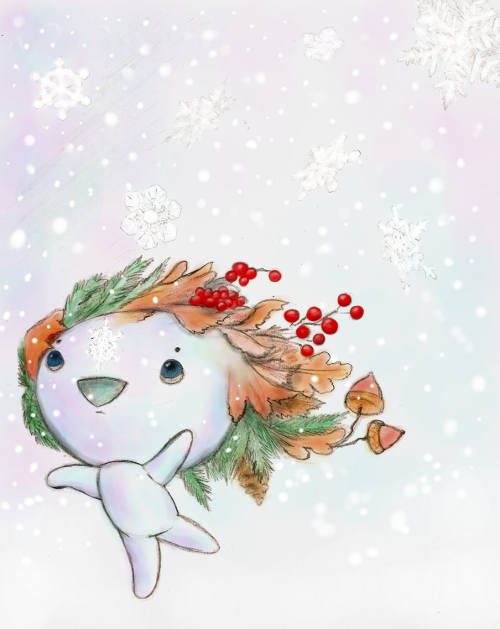
Pixie Wisp Eating Snow Flakes

http://zeluna.net/fairyart/pixiewispsnowflakes.html

Wednesday, November 14, 2012

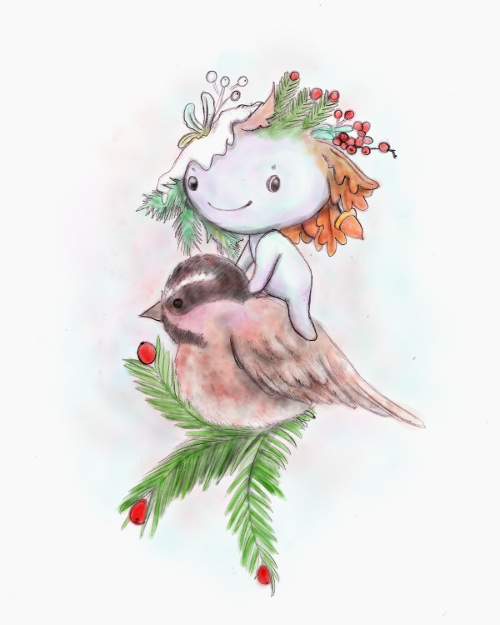
A Pixie Wisp Riding a Bird

Pixie Wisps are close companions with the animals, often living with them in their nests and burrows. Or riding the birds when they need to get somewhere fast.
http://zeluna.net/fairyart/pixiewisponbird.html

Tuesday, November 13, 2012

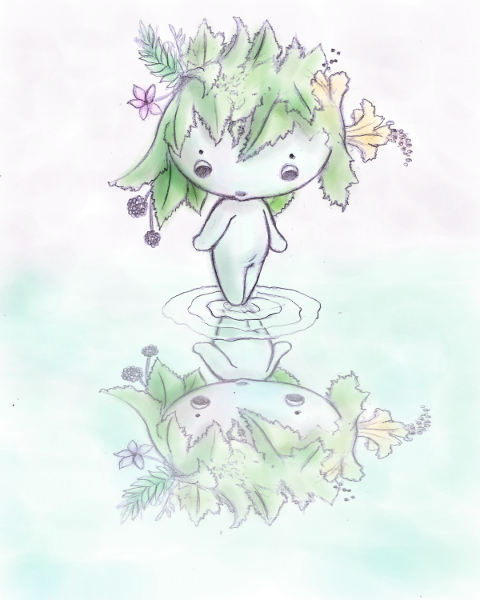
Pixie Wisp looking at its reflection

Monday, November 12, 2012

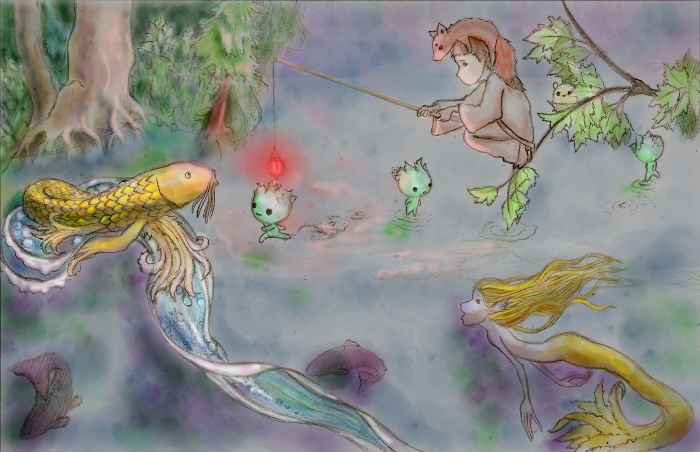
Fishing for the wishing fish


When his kingdom fell a young page was ordered to flee into the forest, into the realm of fairy. Where he now tries to find a way to save his kingdom. So now he fishes for the wishing fish, bobbing a small lantern to look like the dreams that the fish eats when the sun goes down.

Sunday, November 11, 2012

Bunnik

Bunnik are the guardian spirits of the Slavic bath houses. They protect people against illness, evil spirits and even vampires on occasion.
However as with all spirits they are duelistic, both creative and destructive for occasionally they'll flay peoples skin from their bodies with iron claws.

Saturday, November 10, 2012

Humans do exist!!!

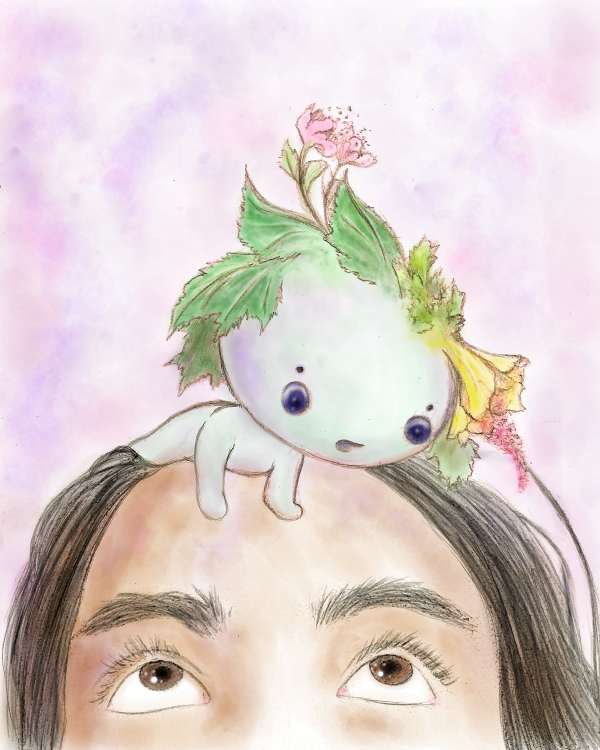
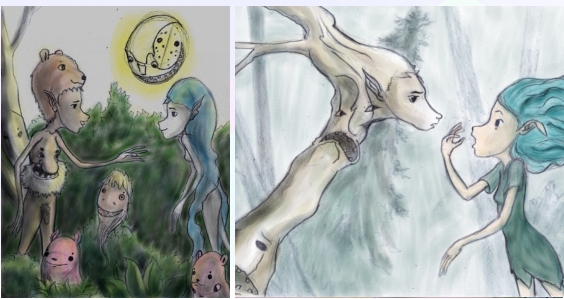
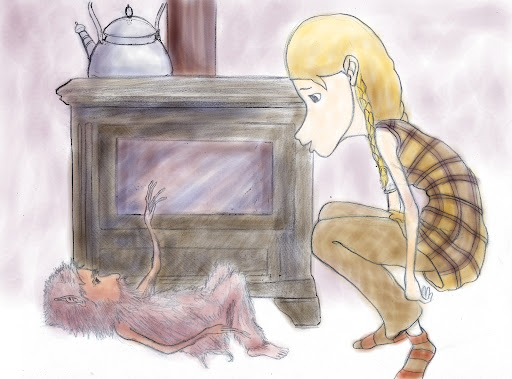
Hidden away in the forest for centuries a curious pixie wisp goes out to explore and discovers much to her surprise that humans do exist.

Saturday, August 18, 2012

Primal Fairies

I'm releasing my newest serialized story primal fairies at http://zeluna.net/stories/primal-fairies

Some of the art from this tale includes


18


Saturday, July 28, 2012

Forest Fairies (Pic 3)


Related Articles
Forest Fairies     Woodland Fairies      Fairy Stories      Sleeping Beauty Fairy       Fairy Story

Japanese Shamanese


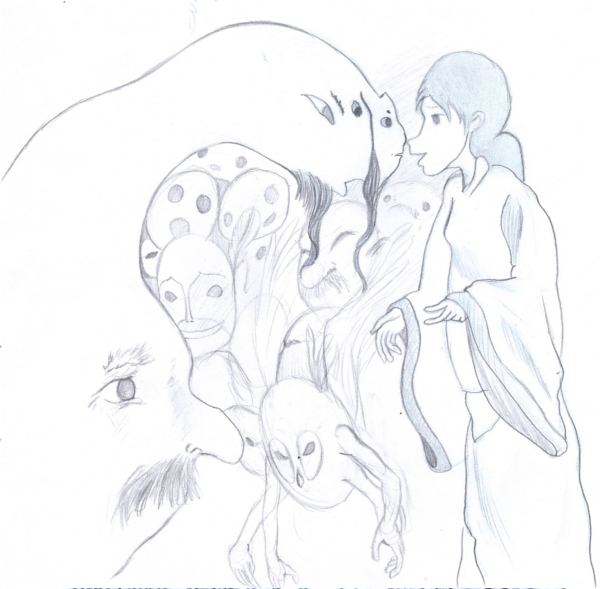
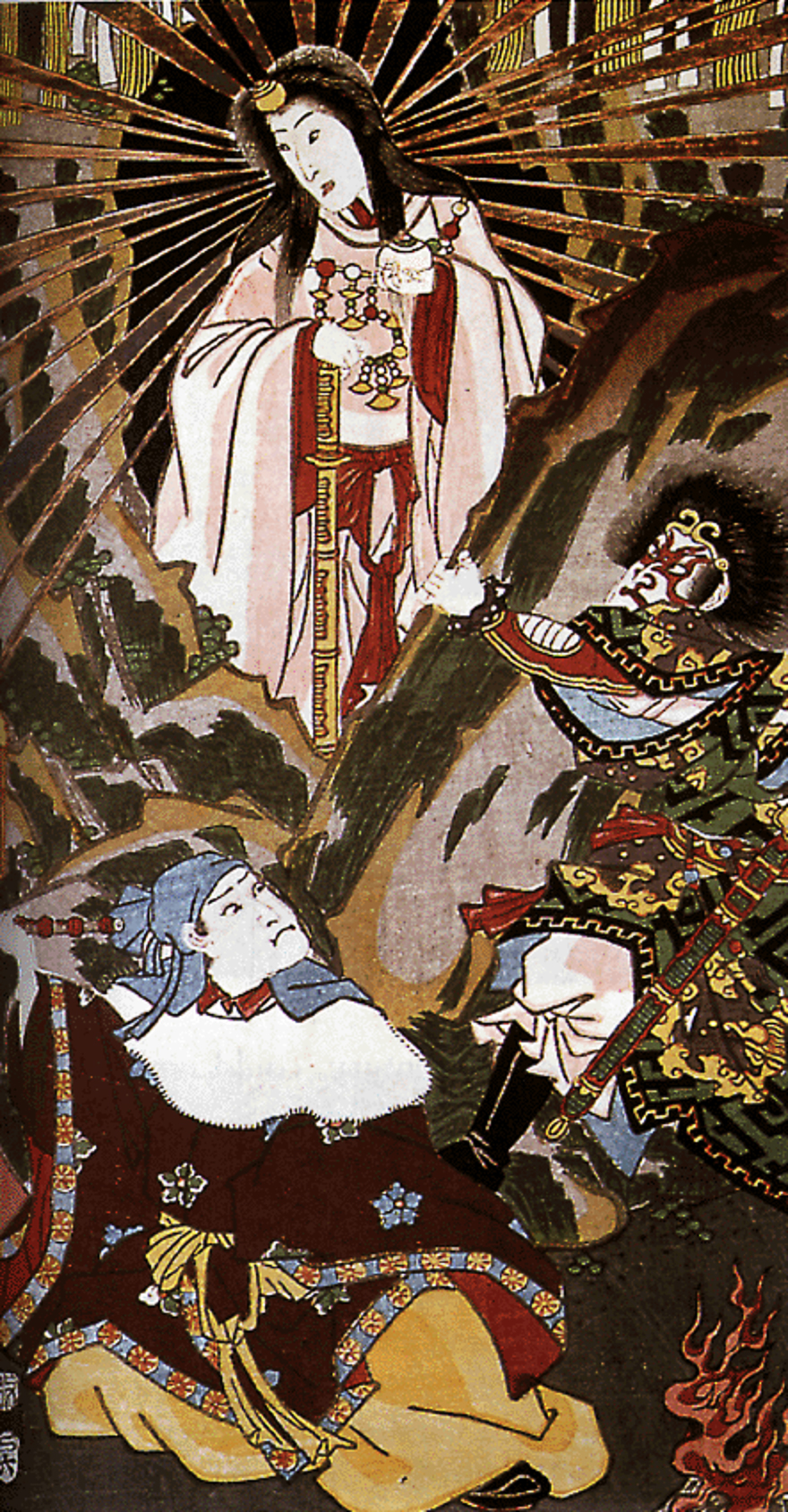
One of the most common themes I draw for is the encounter between the person and the ancients of fairy realm. Such encounters are a mixture of the Cheshire Cats meeting with Alice and the meeting with The Godfather. They are both helpful and nerve racking, annoying and insightful. For this is what the fairy realm is.

Related Articles
Japanese Fairies     Dark Fairy Tales       http://zeluna.net/about-fairiesAbout Fairies

Enter Fairy Land

Enter the woods, for the air we breath within is that of fairyland, that of secrets and whispers as old as life itself.

Take a breath, feel the touch of cool bark beneath the shade of trees older than we.

Enter the land of fairies and be free.


Related Articles

About Fairies     Dark Fairy Tales     Good Fairies

Thursday, July 26, 2012

Garden Fairy

Fairy Art

Fairies love gardens, in Japanese tales many trees in gardens were believed to contain Kami (spirits which are similar to fairies)

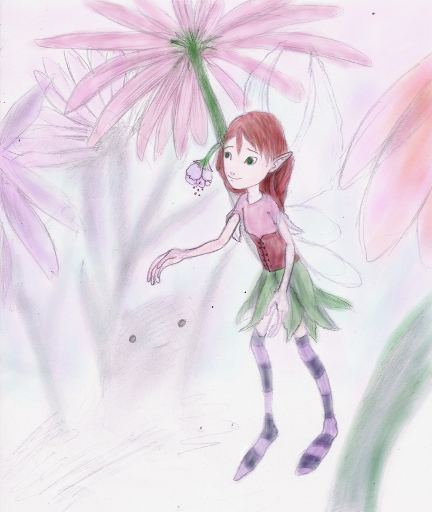
This little fairy pranced beneath the flowers during the spring.


Related Stories
Good Fairies      Fairies       What Are Fairies 

Daily Fairy Picture

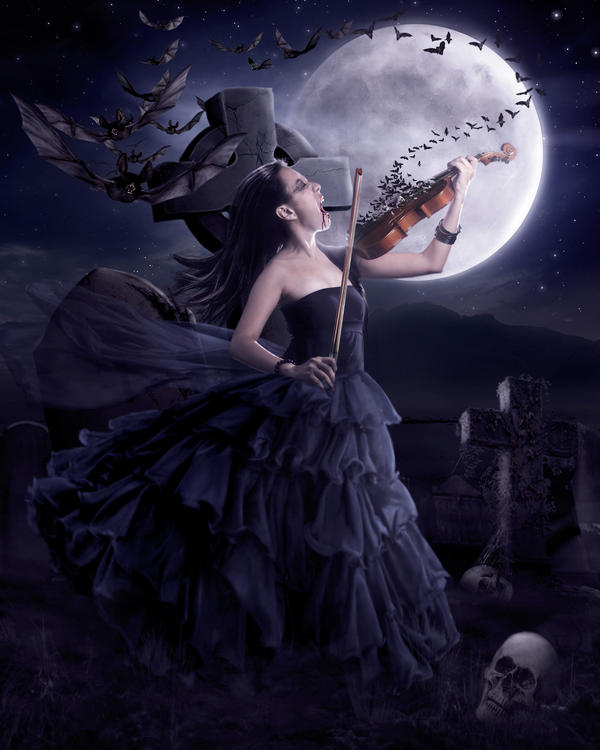
The Vampire and the Fairy

The vampire is creeping out it's fellow forest creature, the fairy.
Though legends of vampires were likely related to fairies before people separated the undead from fairies in recent history.

Related Articles


Wednesday, July 25, 2012

Fairy Images

(Image of a Moss Women)

Images of fairies are deeply ingrained within the human psych because humans are always seeking for something more, something magical. It is perhaps one of our most compelling desires to want a magical world, a world where things are better than our own, where we can explore and discover beauty and mystery.

As the modern era of exploration told us what was in the world, thus taking away its mystery we came to realize that there weren't really dragons at the edge of the map, that there wasn't a magical kingdom with fairy godmothers. Further as people found the wilderness disparaging around them, being replaced by the complexity of the modern world they sought something simpler, something they found in images of fairies.


The fairy world is so much more, however, with tales of the Peter Pan, The Dark Crystal and the Labyrinth these tales became more than an escape, fairies became something strange, something unusual that made us think and ponder.

In the modern era than fairies are not mythology, nor are they pure whimsy, rather fairies are our desire for beauty, our desire for something more.


Fairies and Vampires

There is a strange connection between vampires and fairies... In Ireland people were afraid of bleeding because they were scared that it would make the vampires hungry, elves in folklore stalked the night drinking blood from peoples breasts (See Vampiric Elves for More on this).

Fairies were rarely bright, happy little sprites. Rather, they tended in tales and mythology to be much darker and dangerous and can in many ways be likened to vampires. Indeed, many fairies were the spirits of the dead which were often angry and at times blood thirsty.

There is a Celtic tale and a Slavic tale about people who go to work for a fairy and a vampire respectively. In both these tales the person discovers that their master is going to attempt to steal someone's soul, so to prevent this they say bless you to the person when their master makes them sneeze. In other words both fairies and vampires took power over people by making them sick, and in Vampires and Fairies shared tales.

Rusalka were often the spirits of dead women who would seek to drown their victims or steal their souls.


https://www.amazon.com/dp/1076284515/ref=cm_sw_r_tw_dp_U_x_p7y6DbMZ8D3WV 

Similar to the Rusalka is the nymph of Greek mythology who would lure men to the water side in order to drown them. While in Celtic lore, the Glaistig were beautiful fairies with the legs of a deer or goat that would lure men to dance with them so that they could drink their blood.

Worse still were the angry spirits of the unclean dead throughout Eurasia which trooped about and in Celtic lore were often called fairies and are associated with fairies by most scholars. These spirits of the dead were  condemned to walk the world between heaven and hell, between the living and the damned, just as Vampires are supposed to be today. Further such dark spirits were often blood thirsty draining human life and or blood. In fact given that the writer of "Dracula" was Irish he was likely more inspired by the Celtic and Germanic fairies that drank blood than he was by the Eastern European Vampires.

Part of the challenge in understanding the relationship between fairies and vampires is that words fairies and vampires are both amorphousness, altering meaning to fit the desires of society, further both terms are new terms which have drifted from their original meaning in a short period of time.

There are a few things to keep in mind however;

1- Both fairies and vampires are often times the spirits of dead people.
2-Both evil fairies and vampires can be kept at bay by running water, garlic (or other magical herbs), and the cross.
3-Both fairies and vampires can be driven away by the cocks crow
4-Both fairies and vampires would drink blood.
5-A human killed by a fairy or a vampire is often doomed to walk the earth as a similar spirit.

What we see then is that there is a clear connection between some fairies and the mythology behind the vampires. This similarity runs so deep that one could argue that vampires are a form of fairy, either having come out of stories about fairies, having a similar source, or getting their stories mixed up and blended together.


From Deviant Art


Tuesday, July 24, 2012

Asian Fairies

A servant looses an object in a pool of water and dives down after it to find his employers deceased daughter spinning at a spinning wheel in a tiny house at the bottom of the lake. In return for his silence she gives him supernatural luck at gambling.

Another man sees a women in a dress with patches of leaves emerge from the woods floating above the ground. A girl is given leaves by a tall red man and she gains the power of foresight.

Some have argued that there are no Asian fairies, that the term fairy and the species of mythology is isolated to the Celtic lands. And while it's true that the word fairy is Celtic, the word is used to describe a much older set of beings. In China these beings are called Shin and in Japan they are called Kami.

To understand Asian Fairies we must understand the meaning of the word fairy. One must also understand that fairies have a much older origin in the Indo-European, Altaic, and Ugric beliefs who lived in Central Eurasia and spread into Asia and Europe. In Asia these people became the Japanese, Koreans, Mongolians,  The Indians, the Kalasha, and more.


As with European Fairies Asian fairies are most often connected with nature, living in the mountains which in many Asian countries were the other world in mythology, the realm of spirits and the dead. Fairies, Kami, Shin, etc often live within trees, rocks, springs of water, rivers, the sky, under the earth, and of course in old houses or with their decedents on earth.


Understanding the nature of Asian Fairies is complex and so I'll be releasing an art gallery to describe them in there various countries.


Monday, July 23, 2012

The Definition of Fairy

According to the Websters Dictionary the definition of fairy is;

"a mythical being of folklore and romance usually having diminutive human form and magic powers"

Such a definition clearly shows the Victorian influence on modern society. During the Victorian era many tried to create a cute magical world for children, or to tell moral stories through childlike beings.

Fairy beliefs have much more complex origins however. At one time the religions of Europe viewed the most important supernatural/deity like beings as being not much greater than humanity. Nymphs, Fee and Rusalka would help crops to grow, provide humans with magical inspiration, cure illness, bring rain, etc. In Iceland the fairies of rocks and mountain fairies would protect people and make them wealthy. Thus people would pray to these magical beings, asking them for help or in cases when it was determined that fairies were dangerous people would try to drive them away.

One could argue that in European mythology deities are simply another form of fairy. Zeus was raised by a nymph, Odin would seek aid from nature spirits who knew more than he did, and the earliest Roman and Celtic deities were essentially nothing more than fairies. 

Because fairies had such influence over humanity the original definition of fairy was "the bringers of death (or life)." In other words fairies were considered to be the beings which controlled human fate.They were the most important deities to many people of ancient Europe.


Fairy Pictures

Related Articles: Fairy Art    Types of Fairies     Fairies    Fairy Songs

There are a few things I keep in mind when I draw fairy pictures. First I remember that in myth fairies rarely lived in another world. Rather the world of fairy was alongside our own world; on islands, in forests, in hills, farms, and even our hearths and hobs.

Second the fairy world is very organic and morphable, for although fairies don't like to change they are able to do so even more easily than humans do. Thus when drawing fairy pictures one must consider how fairies might have changed over time.


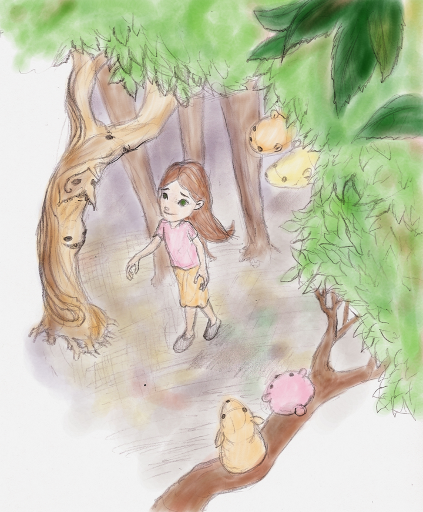
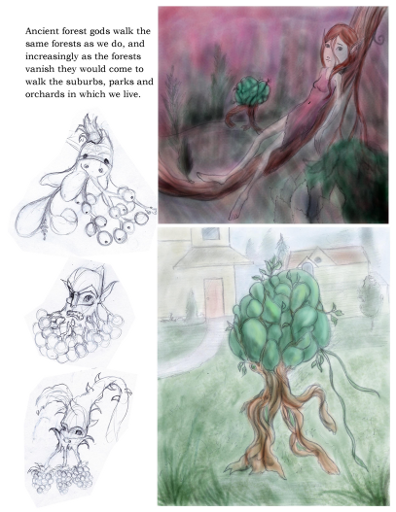
In this fairy picture for example we see a tree spirit returning from shopping, hidden in their human form.

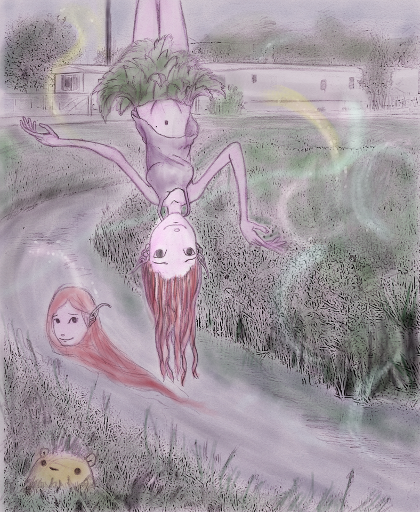
In this picture the Rusalka (a form of Russian Fairy) inhabits man made canals. As an agricultural and water fairy, this fairy would spread into new fields through man made water, which in turn would send it through small cities.

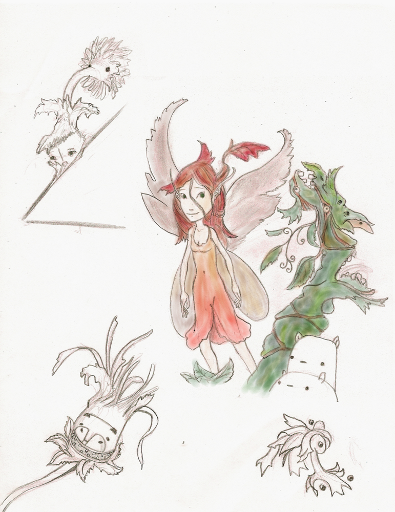
In this picture we see weed fairies. Everything in the fairy world has a spirit and thus weeds within a city and garden would as well.

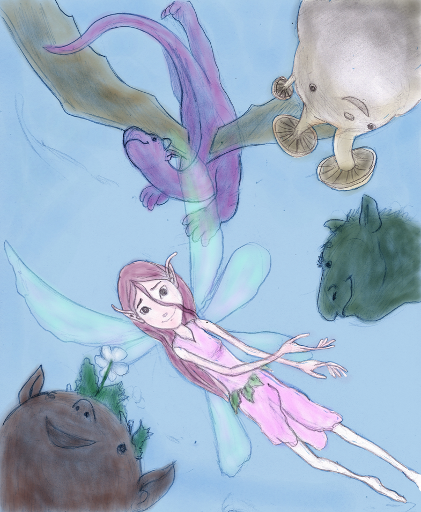
On entering a park a person would come to be surrounded by fairies of all kinds.

Fairies are whimsical, playful. This is why they love children and this is why  they are so difficult for humans to understand. Because we constantly seek a reason, but the truth is that there isn't always a reason. Sometimes fairies are just playing with us.

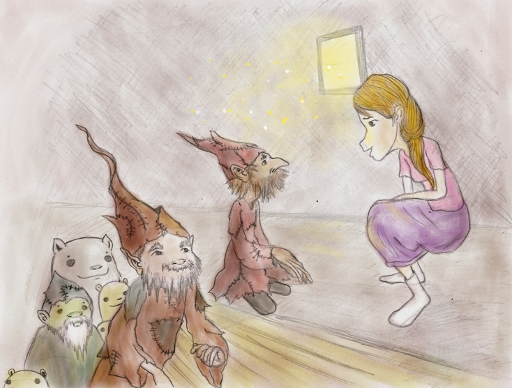
Still as this fairy picture shows it's from fairies that we can seek wisdom, that we can seek to learn. household fairies after all are our ancestors who remain on earth to help us. 

Mari-El

The Mari-El Fairy Tale I translated is now available on http://108.167.136.112/~treespir/essays.
I'm very pleased to see my stories being used. If you're interested in using my fairy tales please feel free, only provide a link to my site so that I can continue to translate these stories.